
News Date : 17 Sep 2026 News Report
Hyderabad, September 17, 2026:
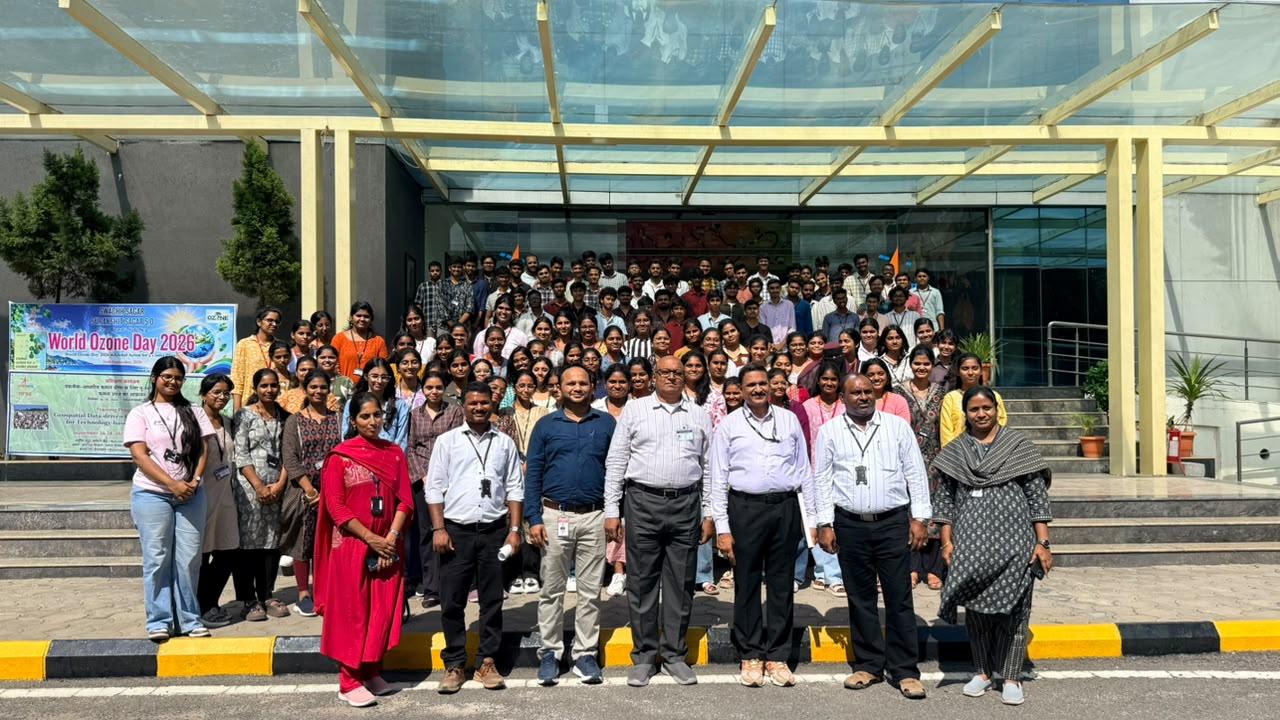
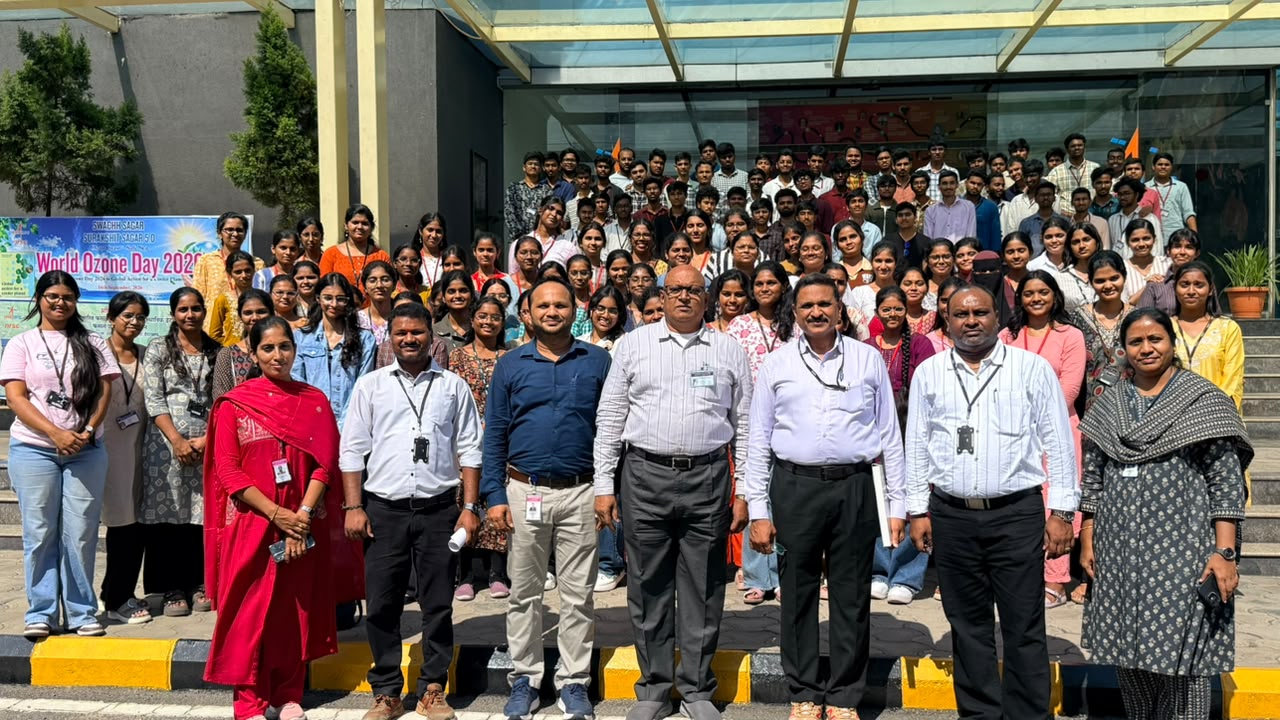
A group of 125 students of Mahatma Gandhi Institute of Technology (MGIT), comprising students from the 1st, 2nd and 4th years of the Computer Science and Engineering (CSE) department, visited the National Remote Sensing Centre (NRSC), Jeedimetla, today to gain first-hand exposure to satellite technology, remote sensing applications, and meteorological data systems.
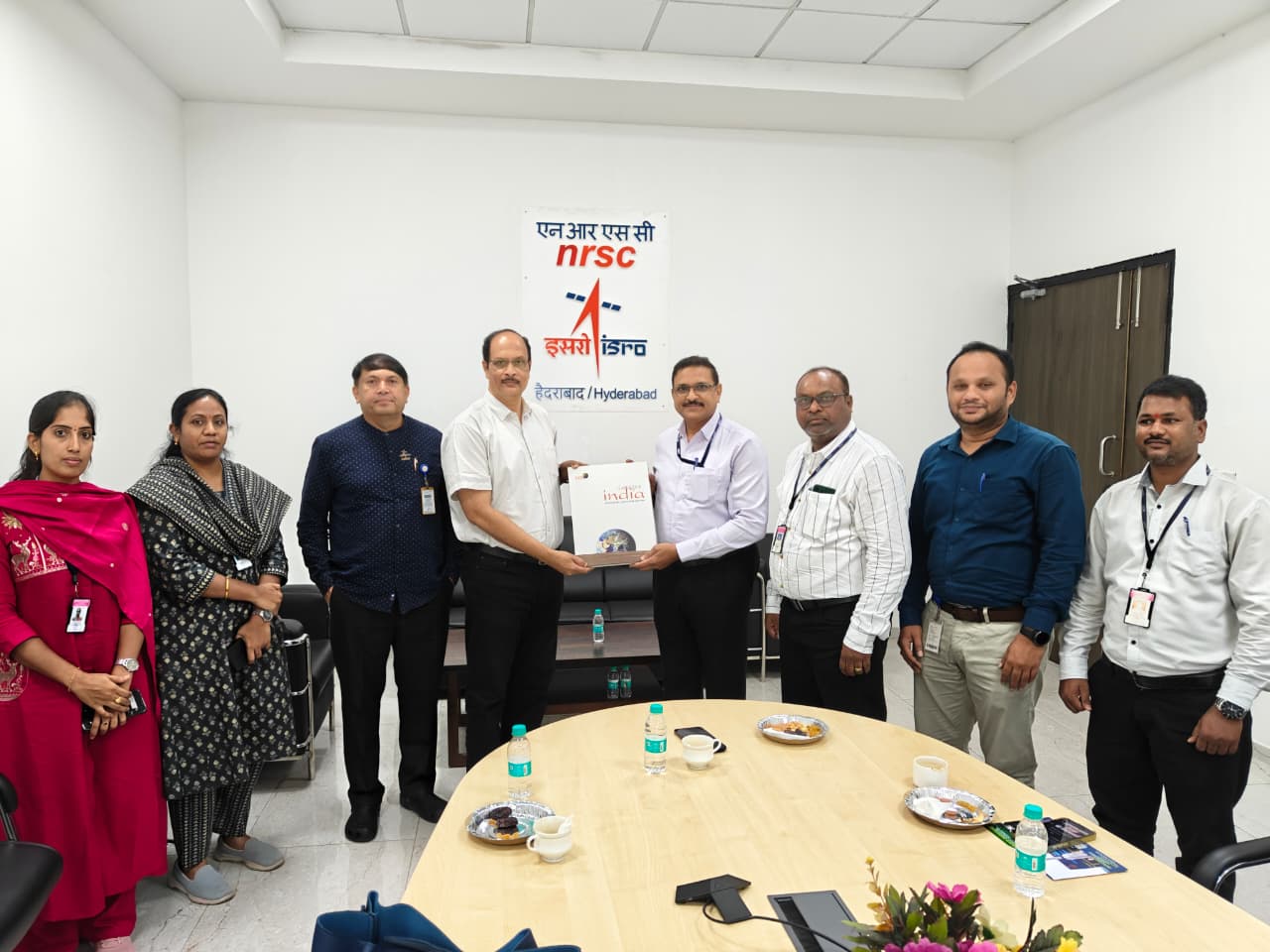
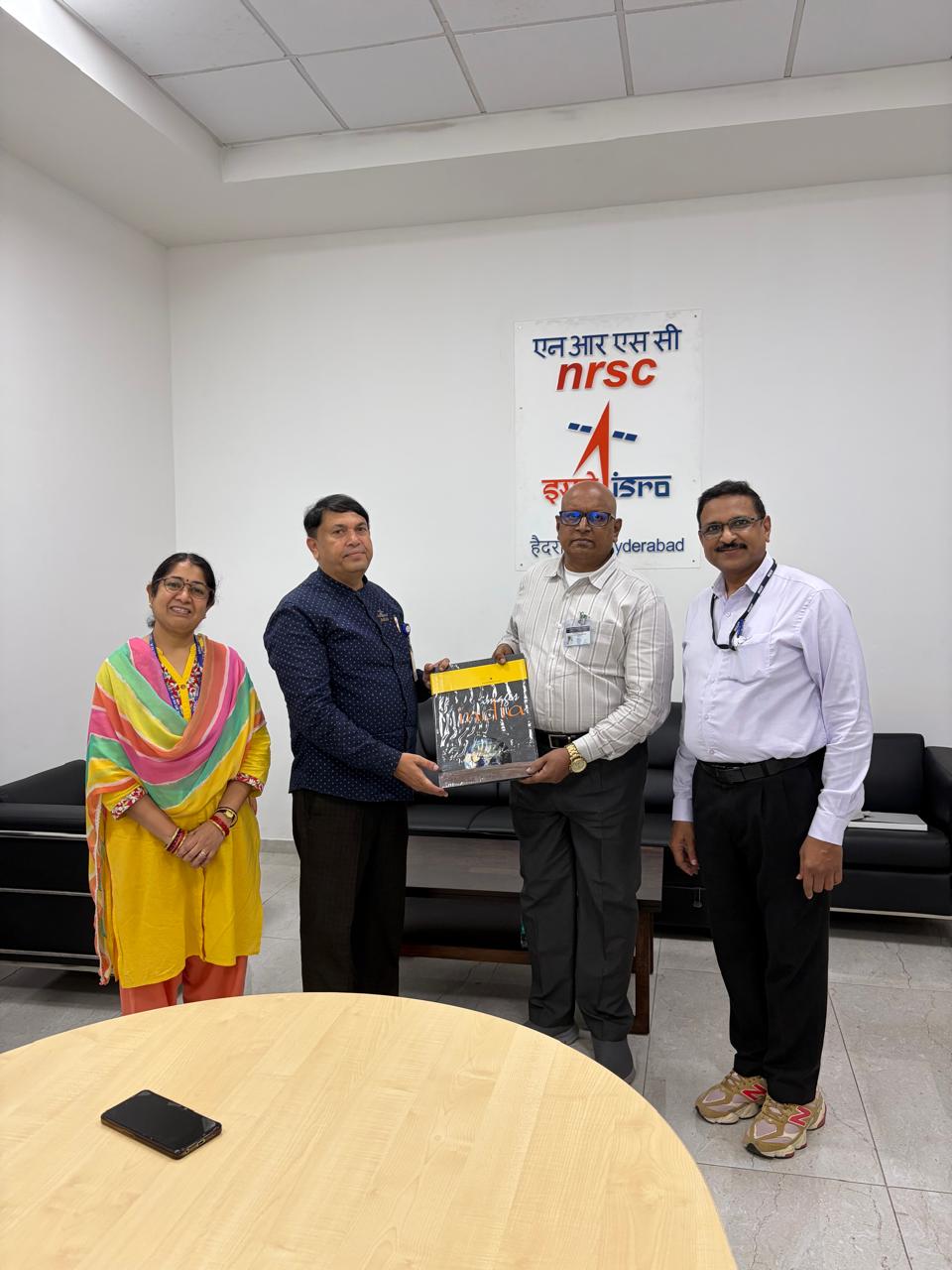
The students were accompanied by Principal Prof. G. ChandraMohan Reddy, Head of the Department of CSE Prof. T. V. Rajanikanth, and six faculty members. The students and faculty members received a warm welcome from the NRSC authorities.
During the visit, the students were given an opportunity to observe how live data from INSAT-3D is received and processed. They were also introduced to various systems used for weather monitoring, wind analysis, and cyclone prediction. The interaction provided the students with valuable insights into the practical applications of satellite-based technologies in meteorology and environmental monitoring.
The students also visited the NRSC Museum and explored the Space on Wheels exhibition, where they learned about different types of satellites, planets of the Solar System, satellite-based earth observation, atmospheric data, meteorological observations, weather patterns, cloud monitoring, and environmental conditions.
The students were further briefed on how meteorological data is collected through ground stations and how satellite-based systems support the monitoring and analysis of various atmospheric and environmental parameters. The exposure to open satellite data and its applications helped the students understand the role of remote sensing and space technology in addressing real-world challenges.
A particularly memorable aspect of the visit was the students’ interaction with members of the team associated with the India–Antarctica ground station. The students expressed their enthusiasm about the opportunity to learn from professionals working in advanced areas of space and earth observation. The interaction also opened up possibilities for internship opportunities for interested students.
The visit was conducted under the guidance of Sri P. Shashidhar Reddy, Head, NRSC–Jeedimetla Outreach Group, and Dr. R. Srinivas, Head, Students Outreach Programme.
Speaking on the occasion, the Principal, Head of the Department of CSE, faculty members, and students expressed their gratitude to the NRSC authorities for providing the students with this valuable learning opportunity and for enlightening them about satellite technology, remote sensing, meteorological applications, and space-based earth observation systems.
The visit served as an enriching academic and experiential learning opportunity, enabling the students to connect their classroom knowledge with real-world applications in space technology, remote sensing, meteorology, and environmental monitoring.
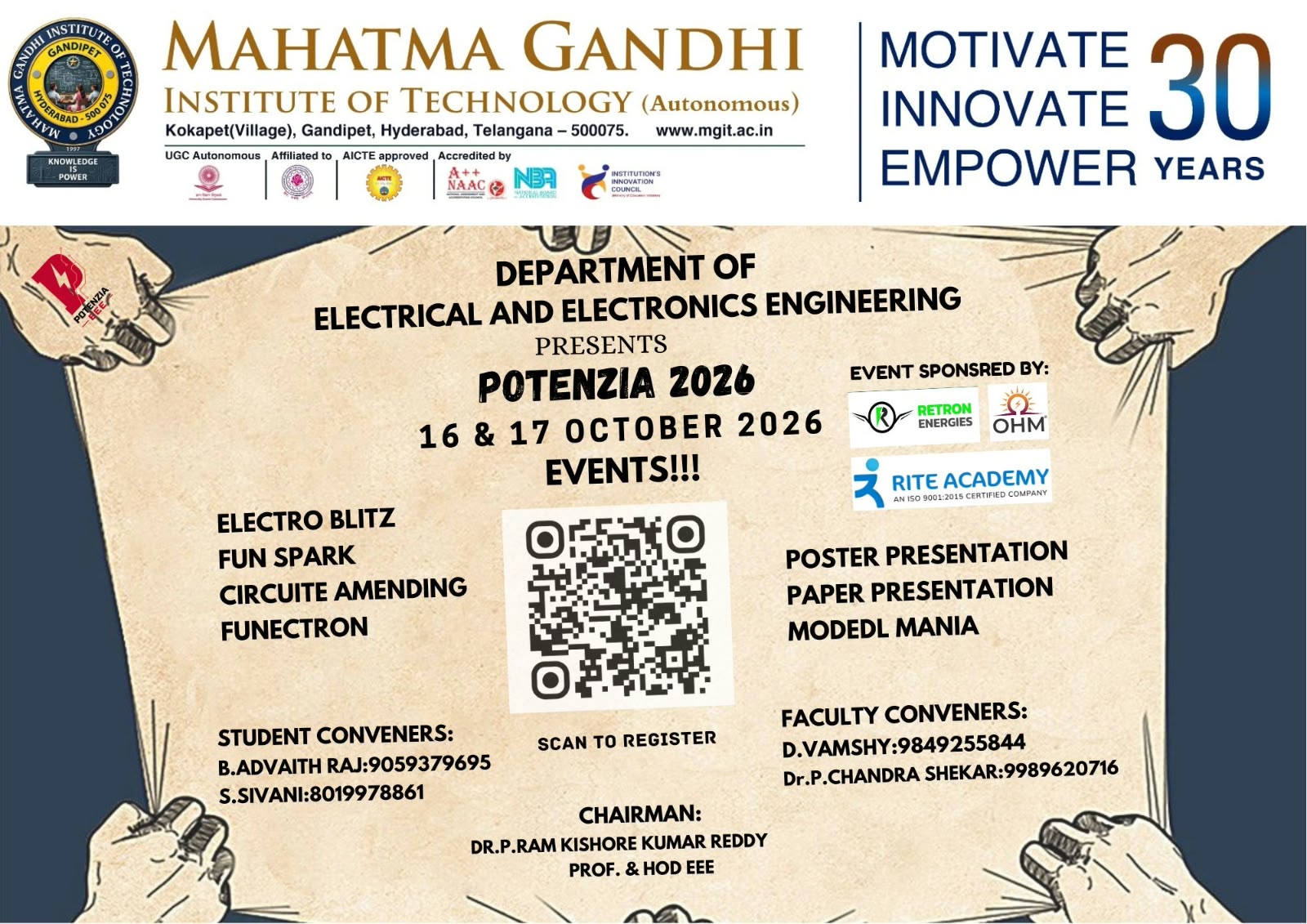
Mahatma Gandhi Institute of Technology (Autonomous) Department of Electrical and…
16 Oct 2026 - 17 Oct 2026
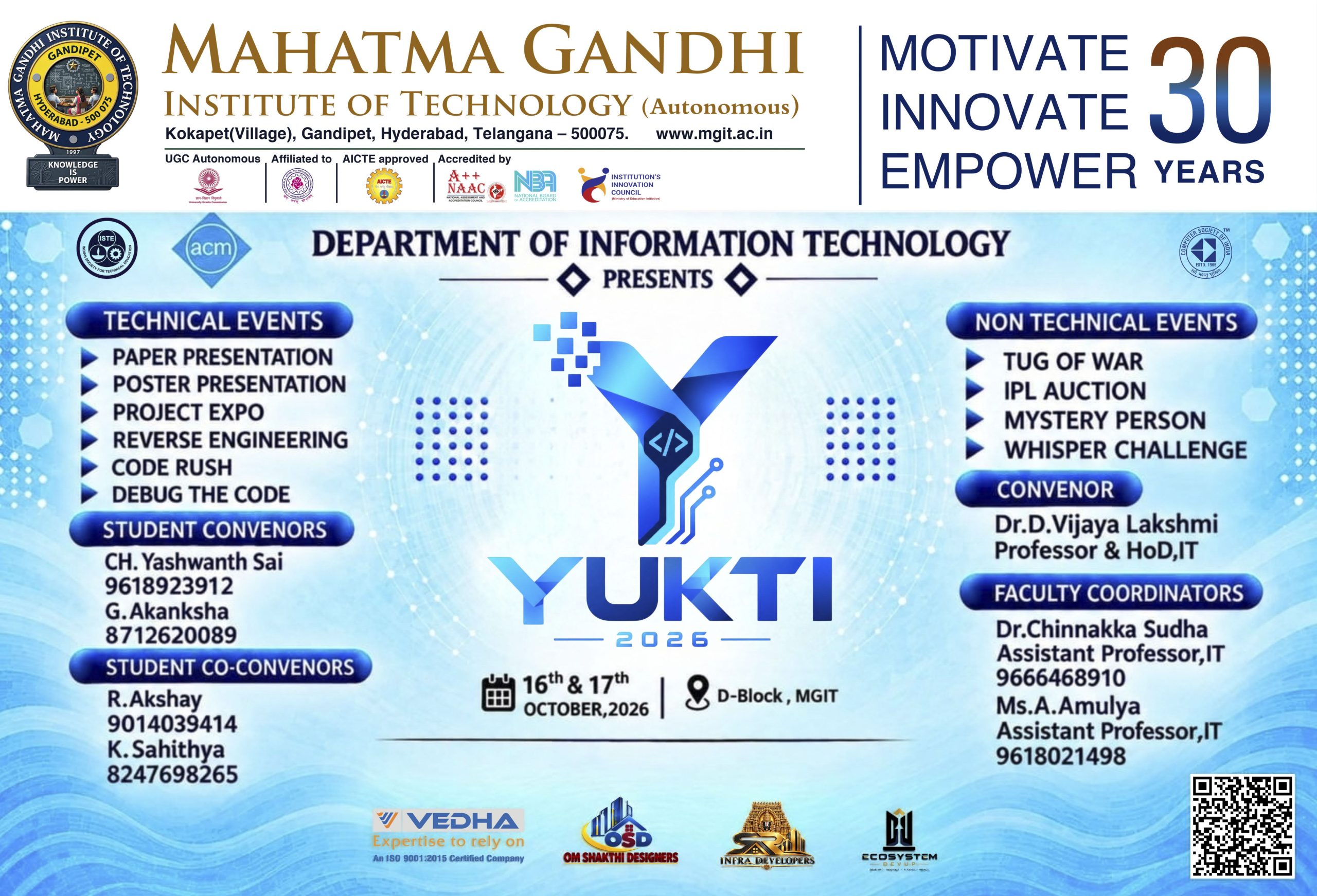
Mahatma Gandhi Institute of Technology (Autonomous) Department of Information Technology…
16 Oct 2026 - 17 Oct 2026
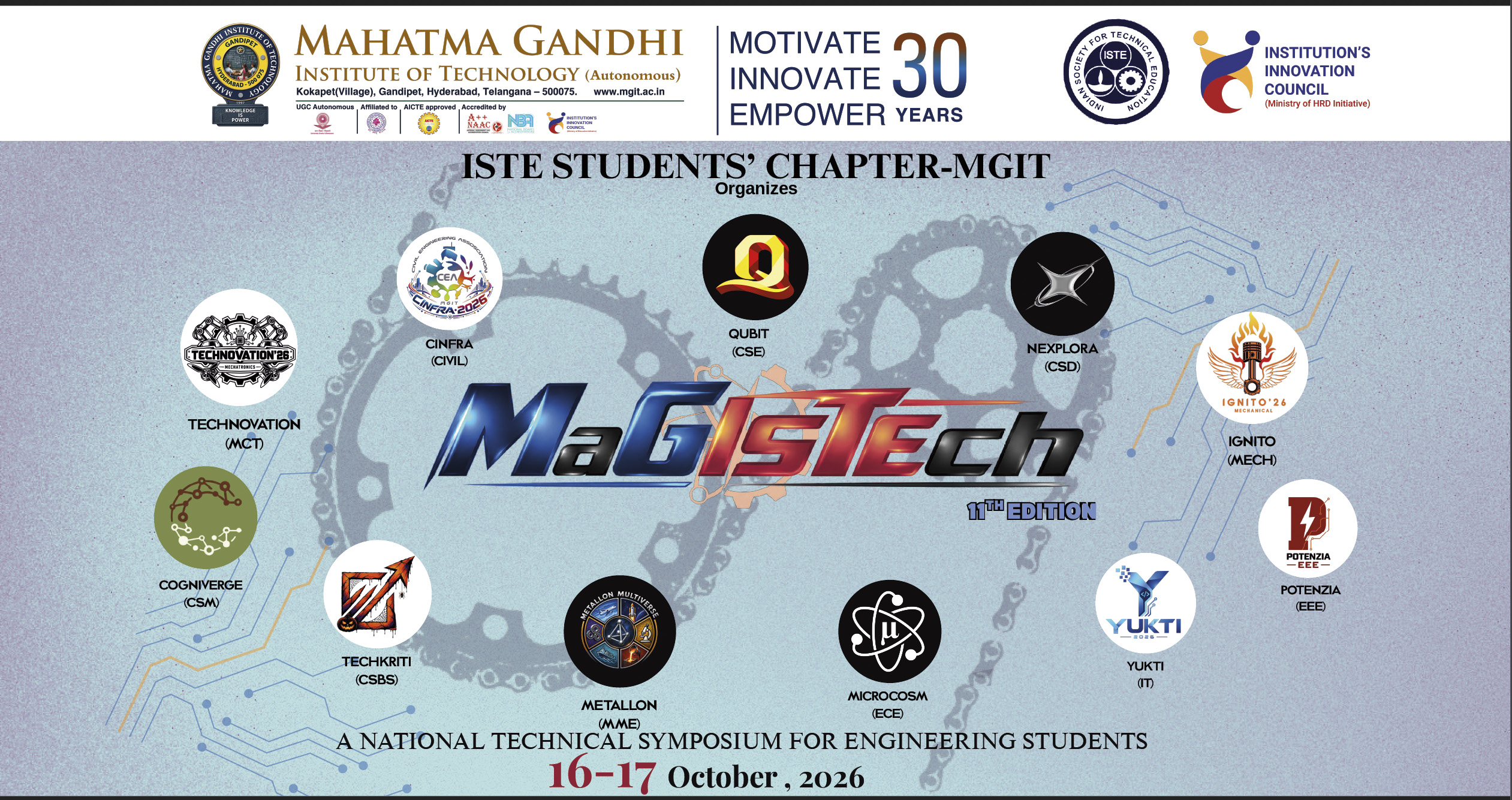
Upcoming Event · National-Level Technical Symposium MAGISTECH 2026 A Two-Day…
16 Oct 2026 - 17 Oct 2026
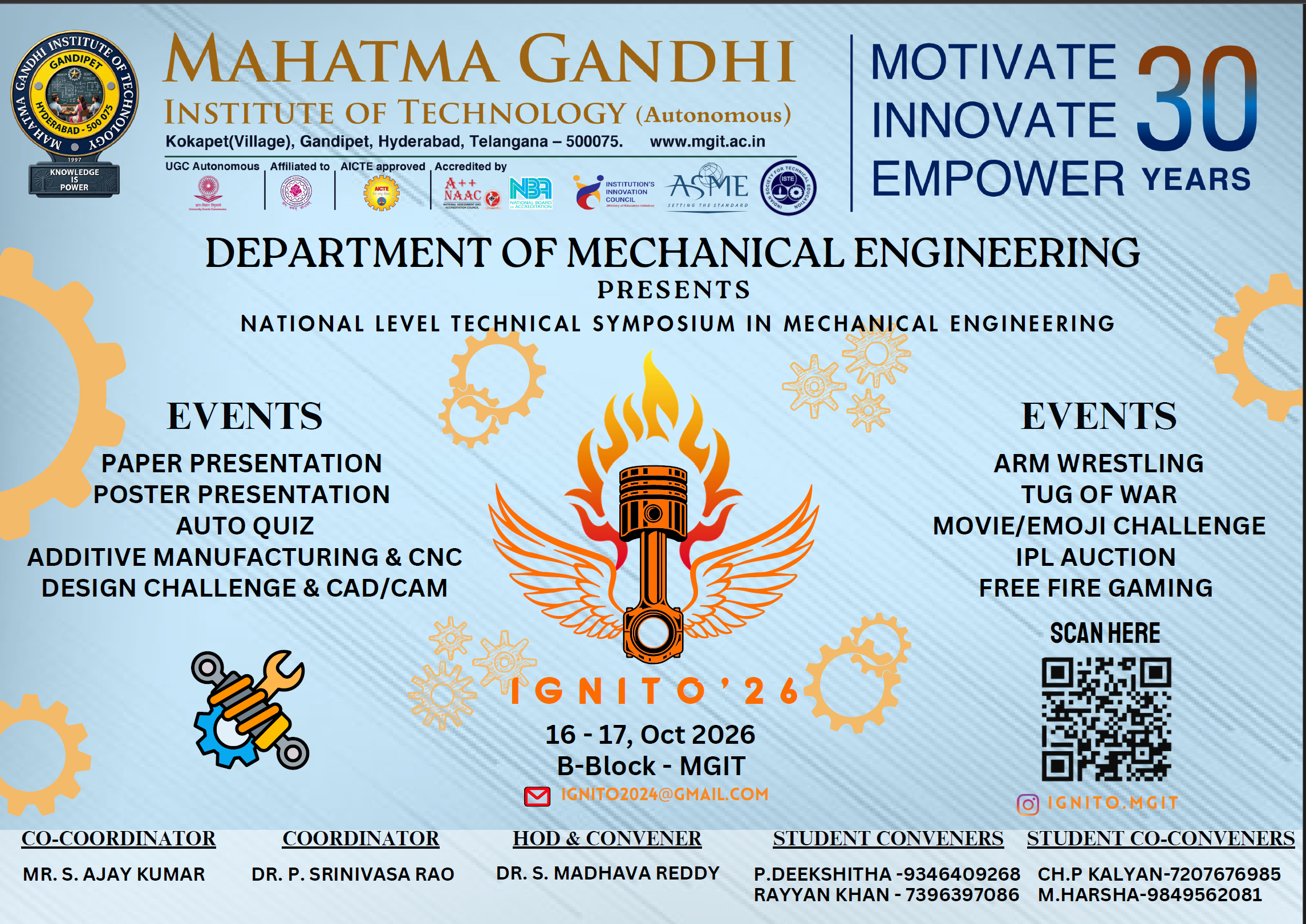
Mahatma Gandhi Institute of Technology (Autonomous) Department of Mechanical Engineering…
16 Oct 2026 - 17 Oct 2026
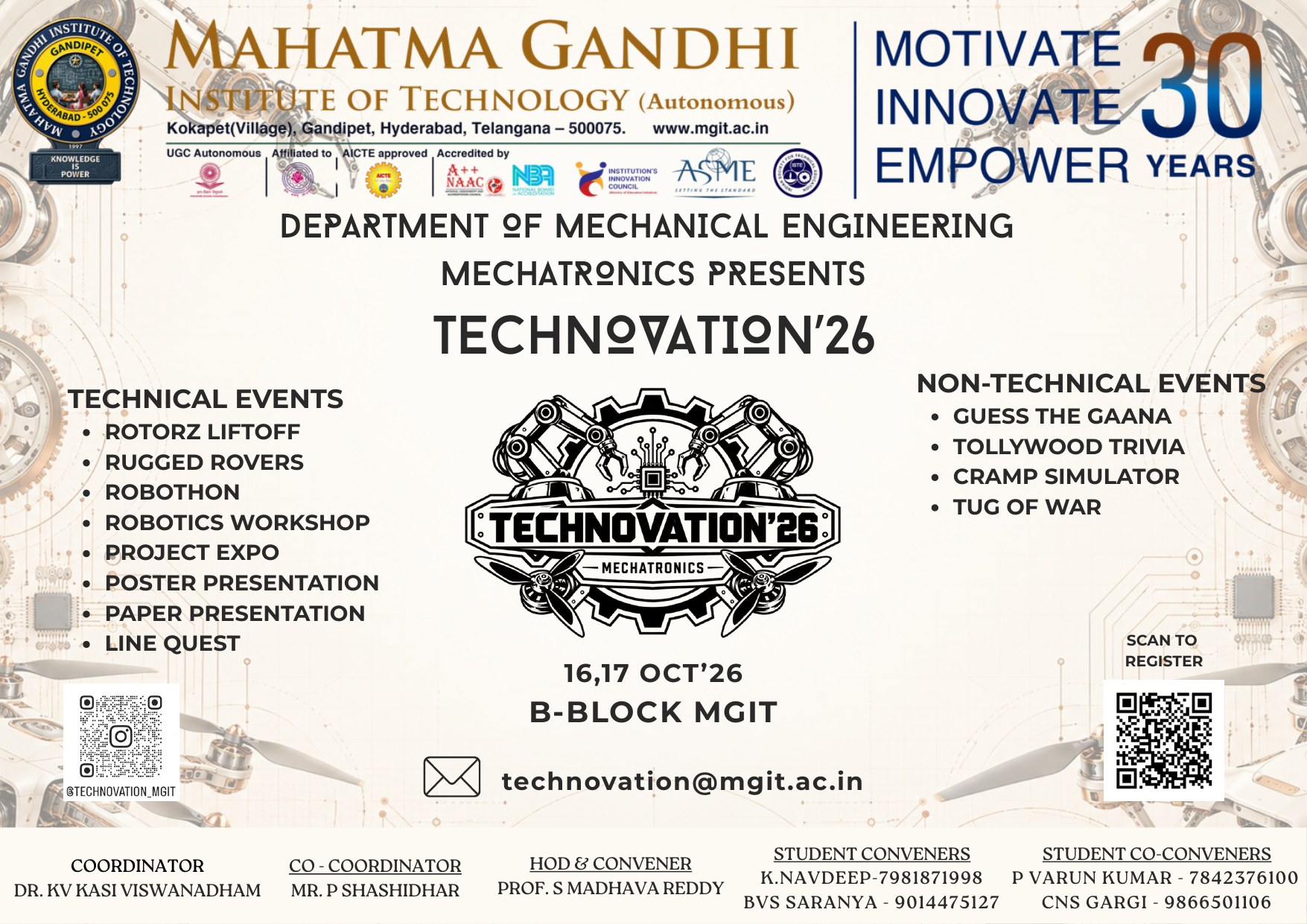
Mahatma Gandhi Institute of Technology (Autonomous) Department of Mechanical (Mechatronics)…
16 Oct 2026 - 17 Oct 2026
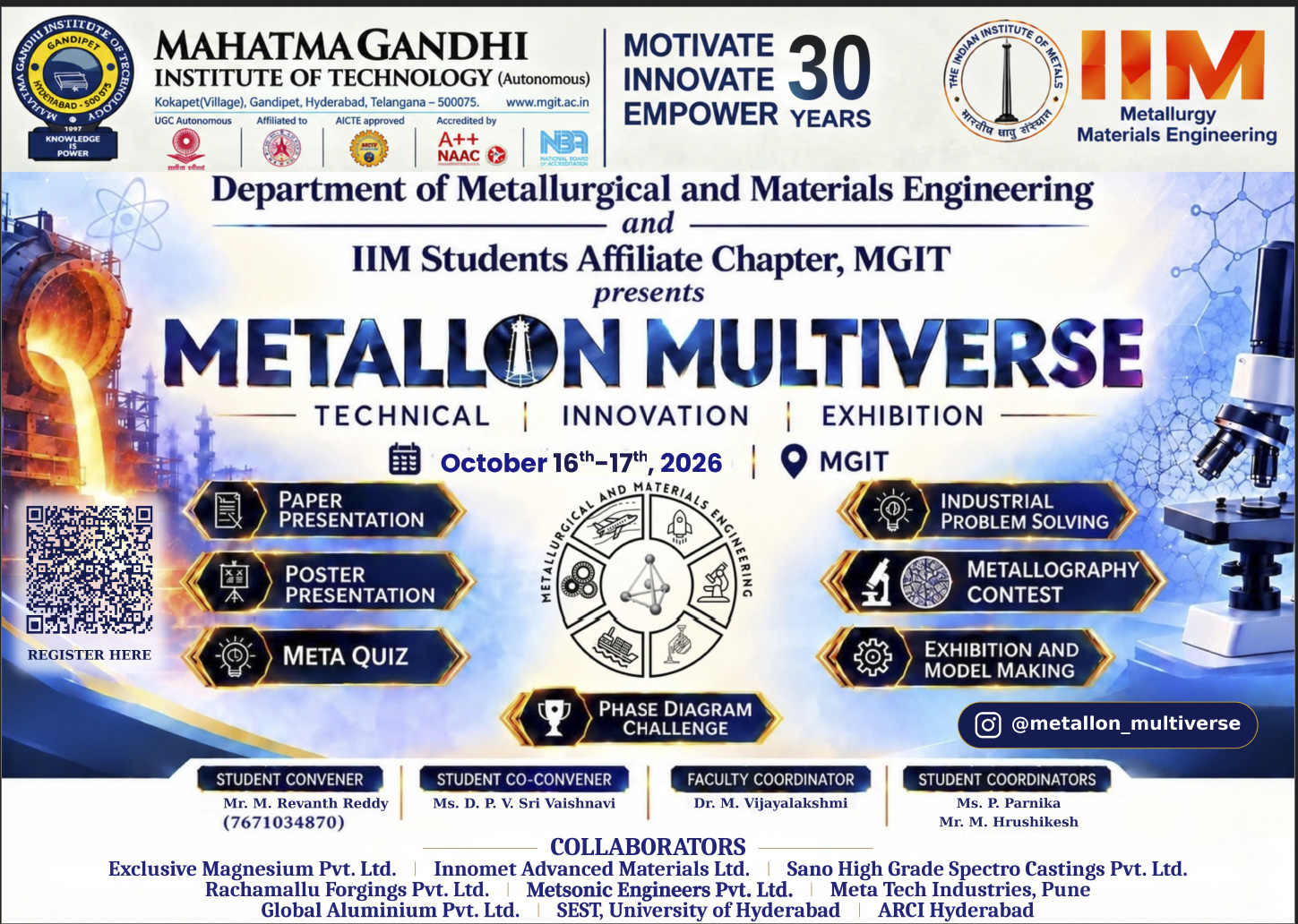
Mahatma Gandhi Institute of Technology (Autonomous) Department of Metallurgical and…
16 Oct 2026 - 17 Oct 2026
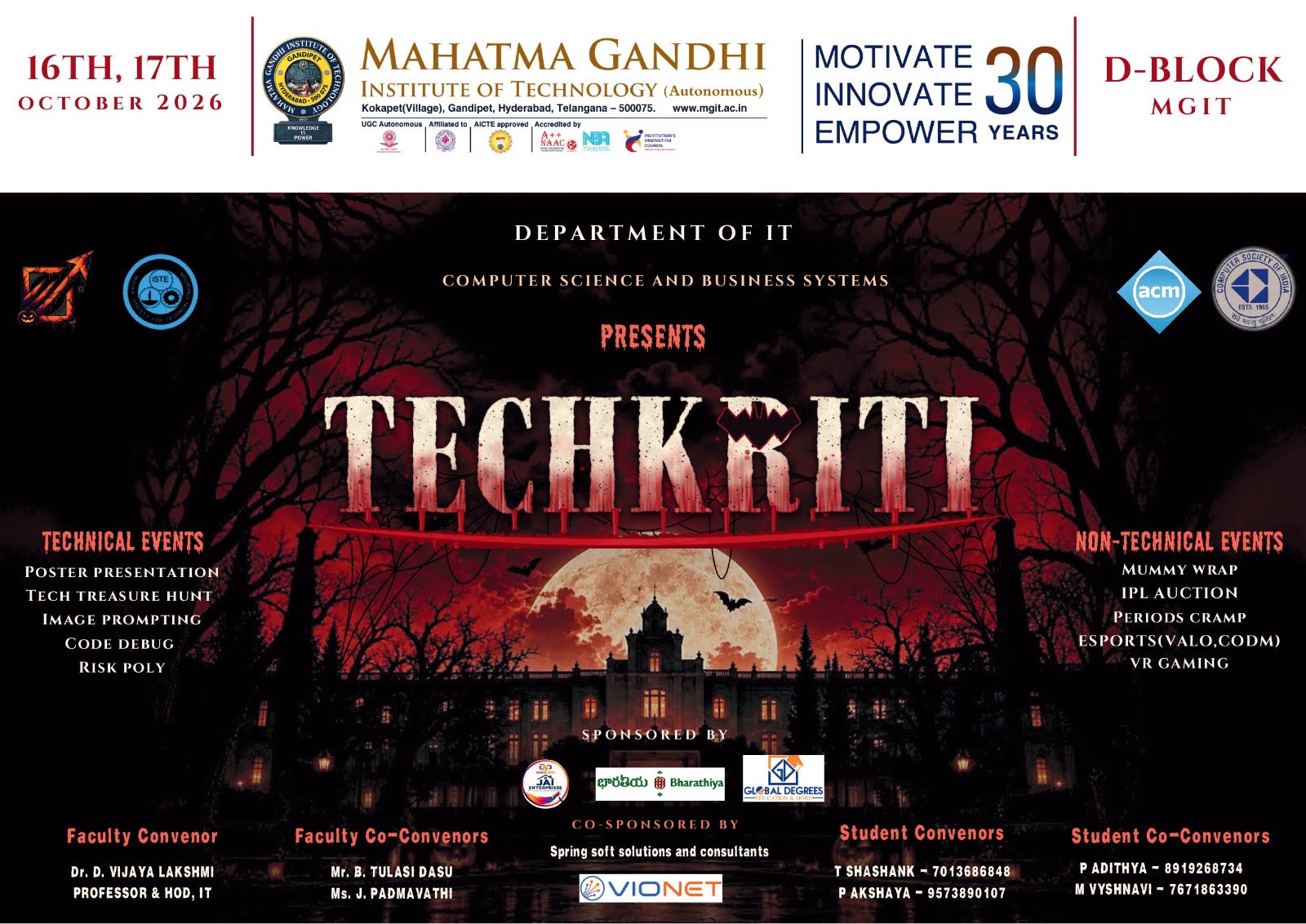
Mahatma Gandhi Institute of Technology (Autonomous) Department of IT –…
16 Oct 2026 - 17 Oct 2026
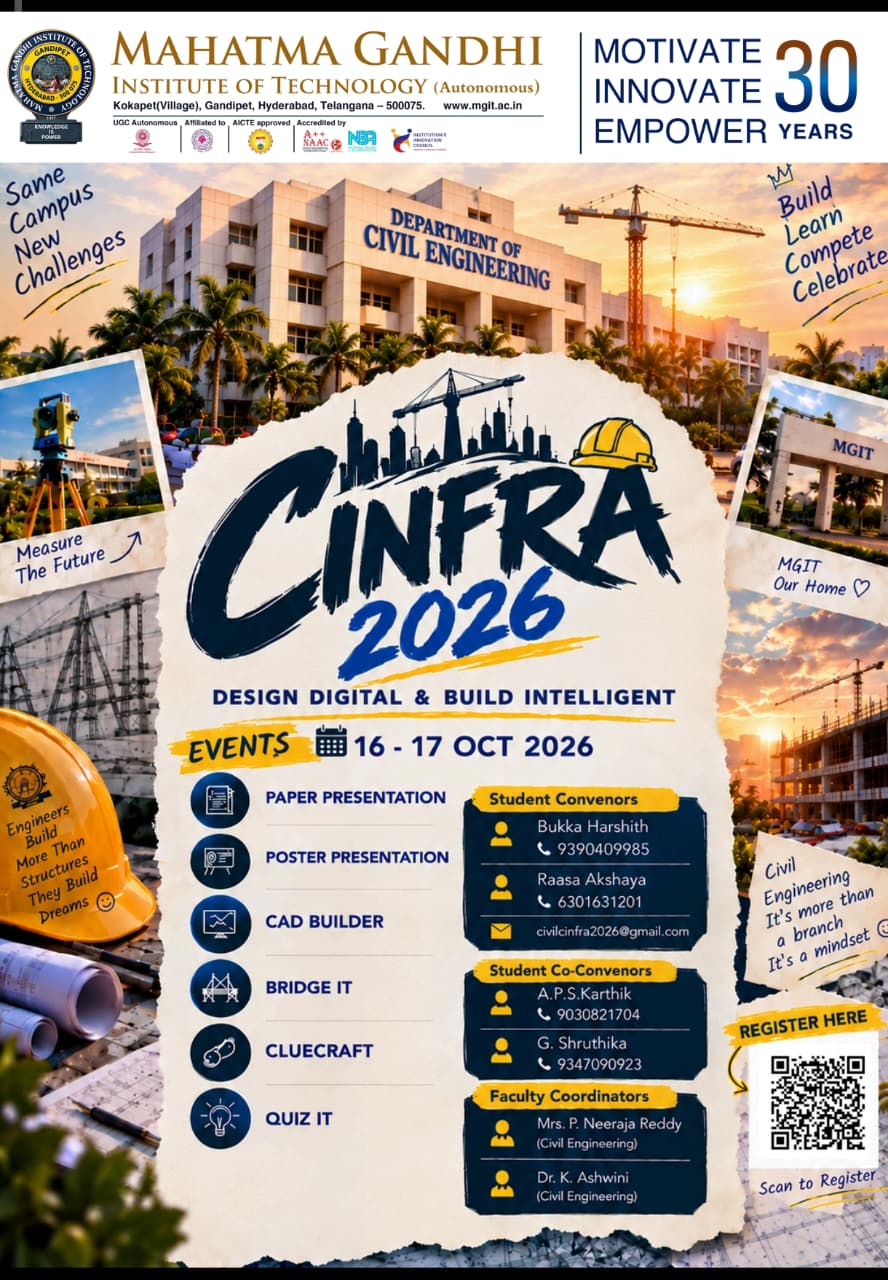
Mahatma Gandhi Institute of Technology (Autonomous) Department of Civil Engineering…
16 Oct 2026 - 17 Oct 2026