
News Date : 26 Sep 2026 News Report
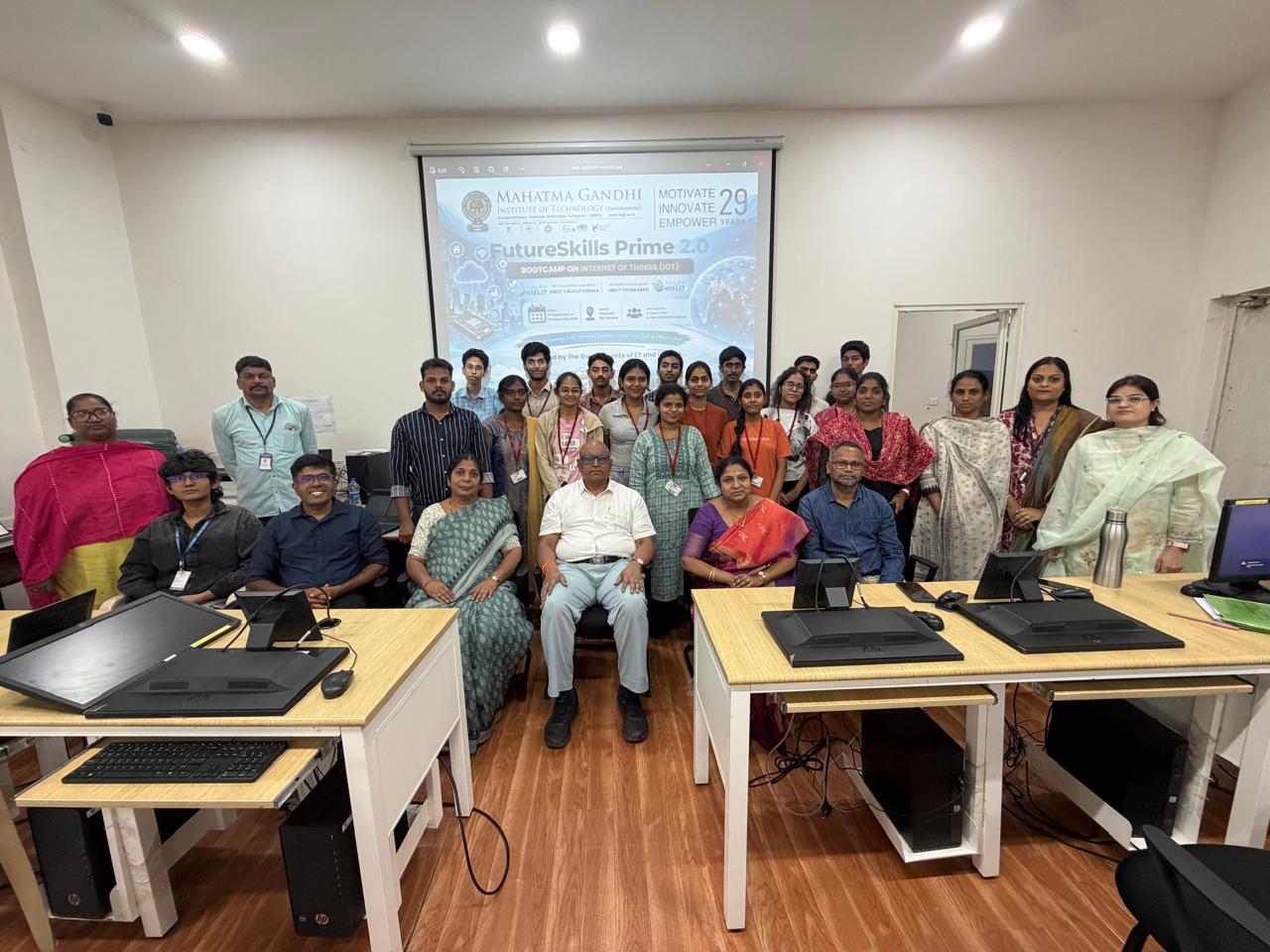
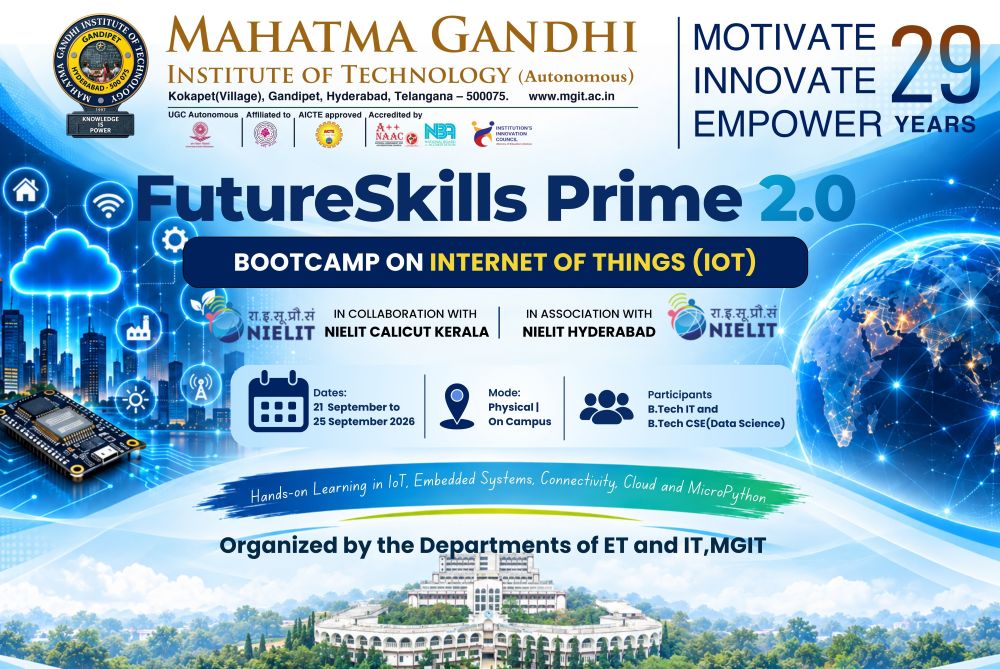
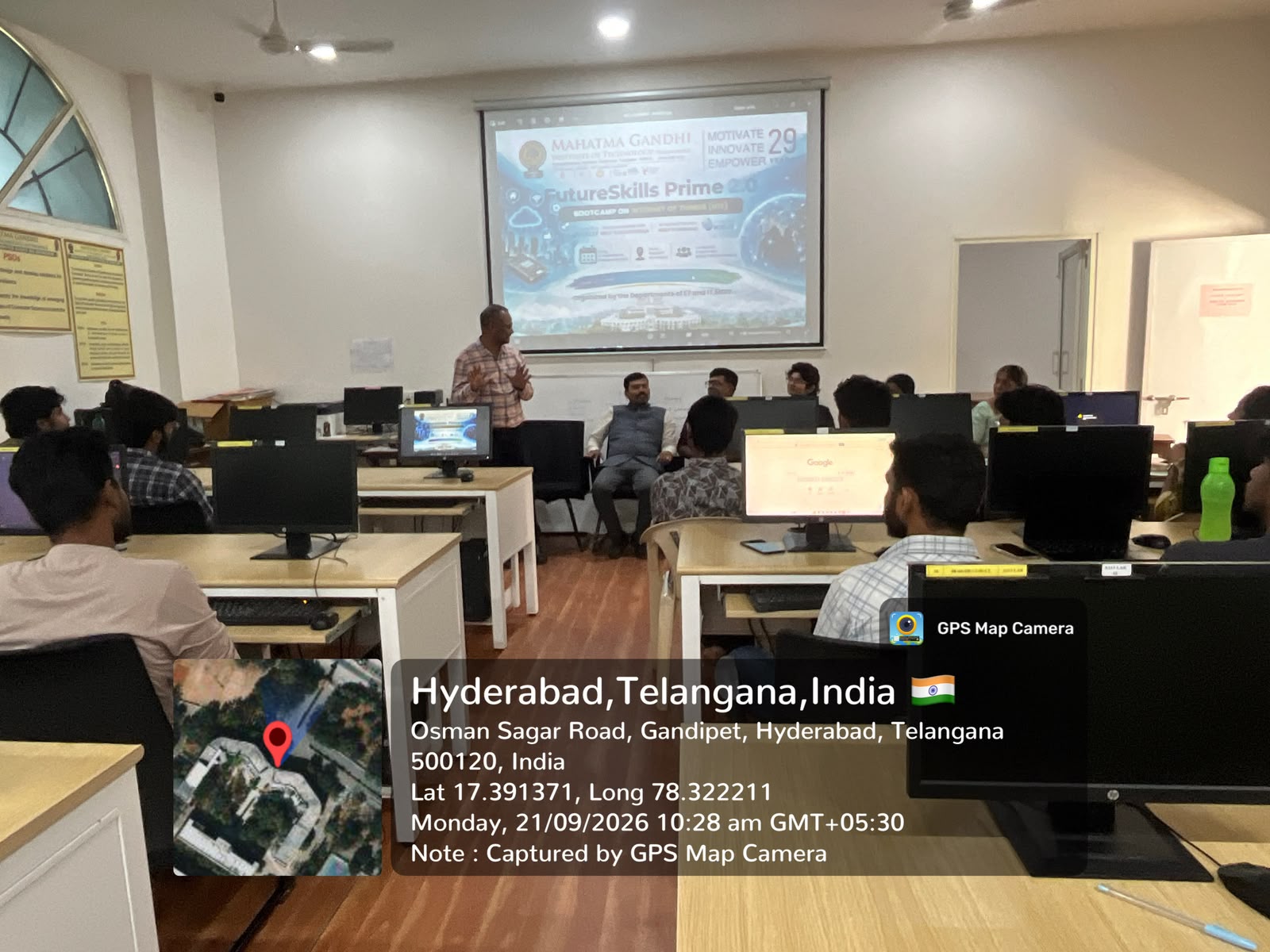
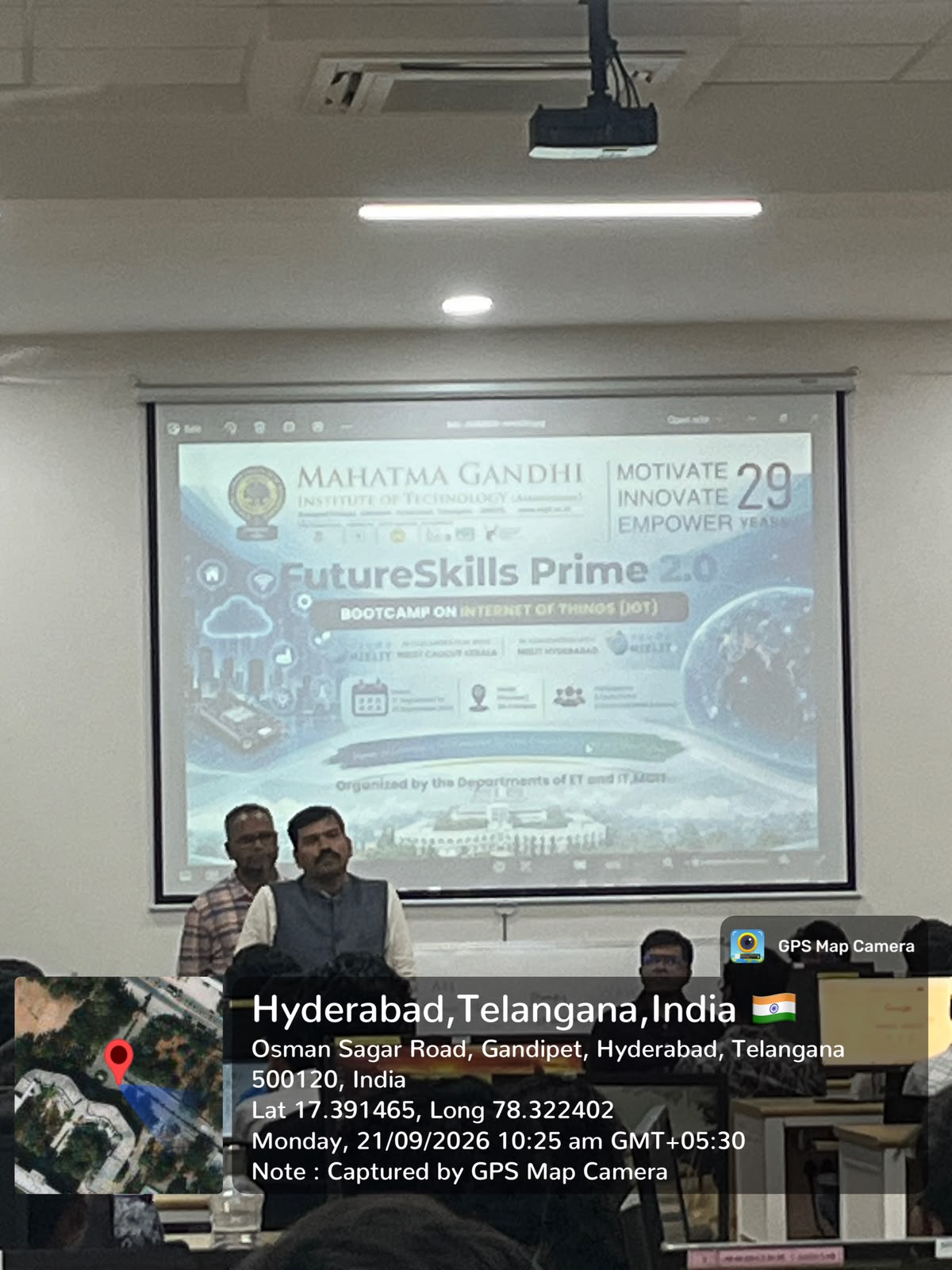
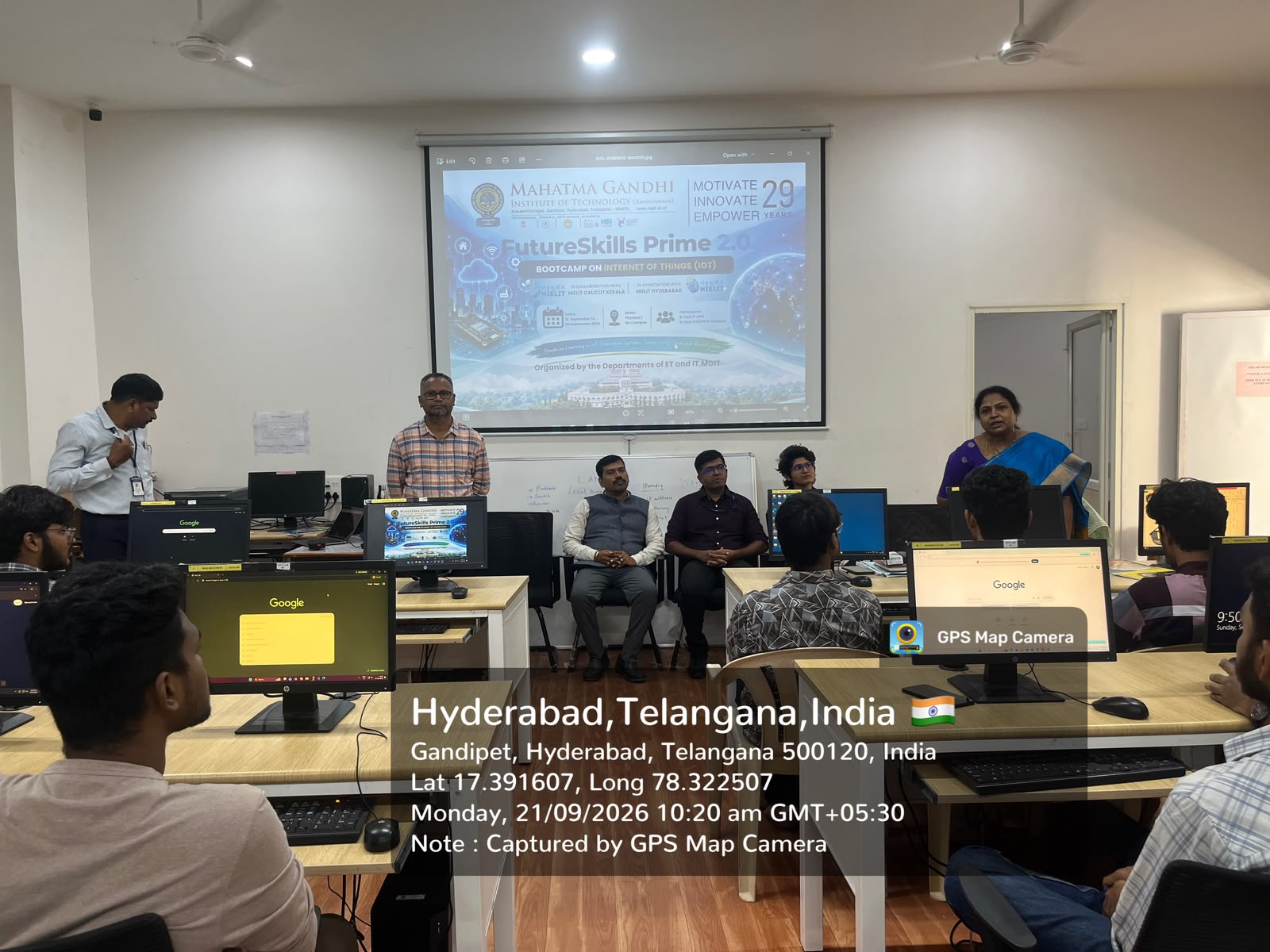
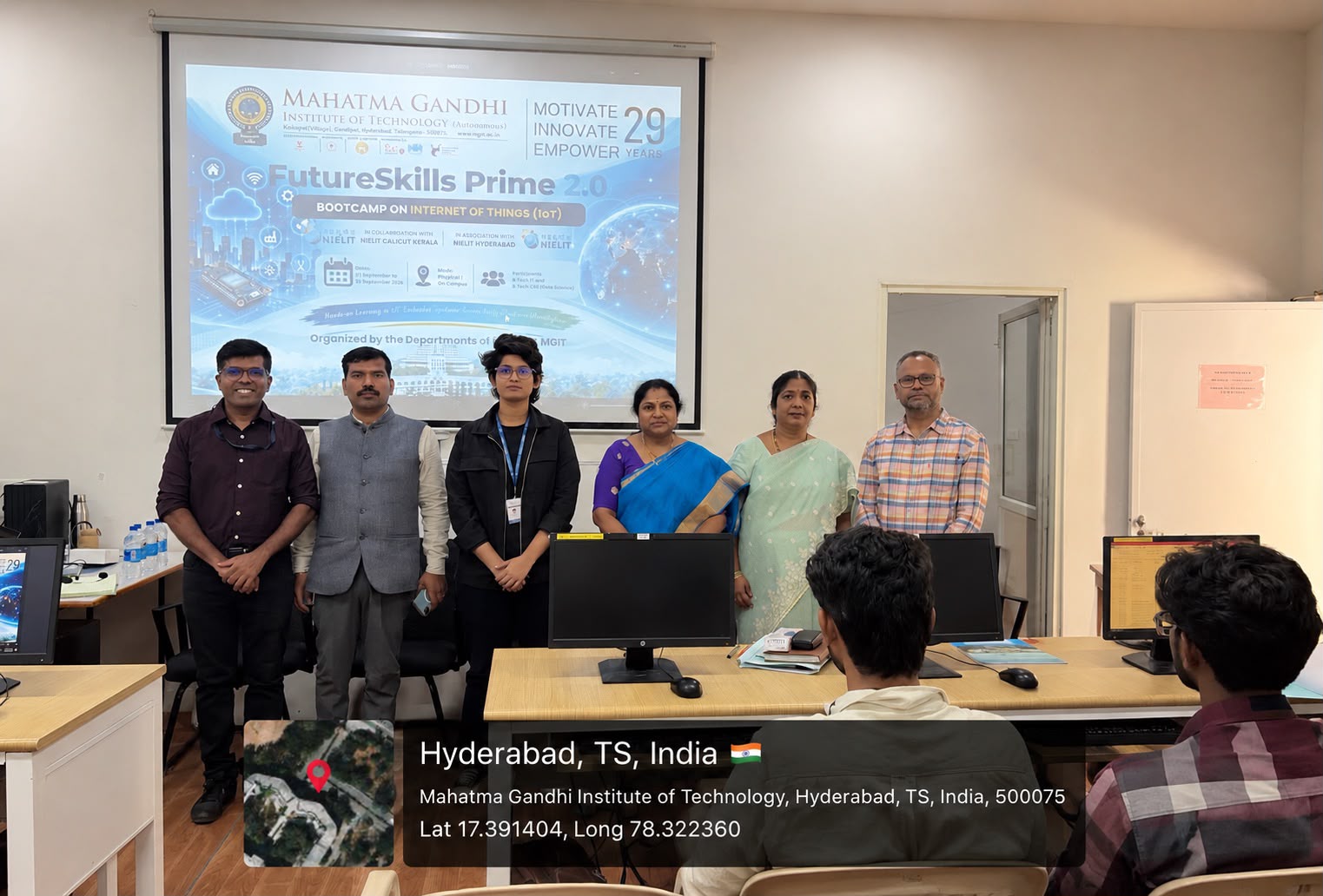
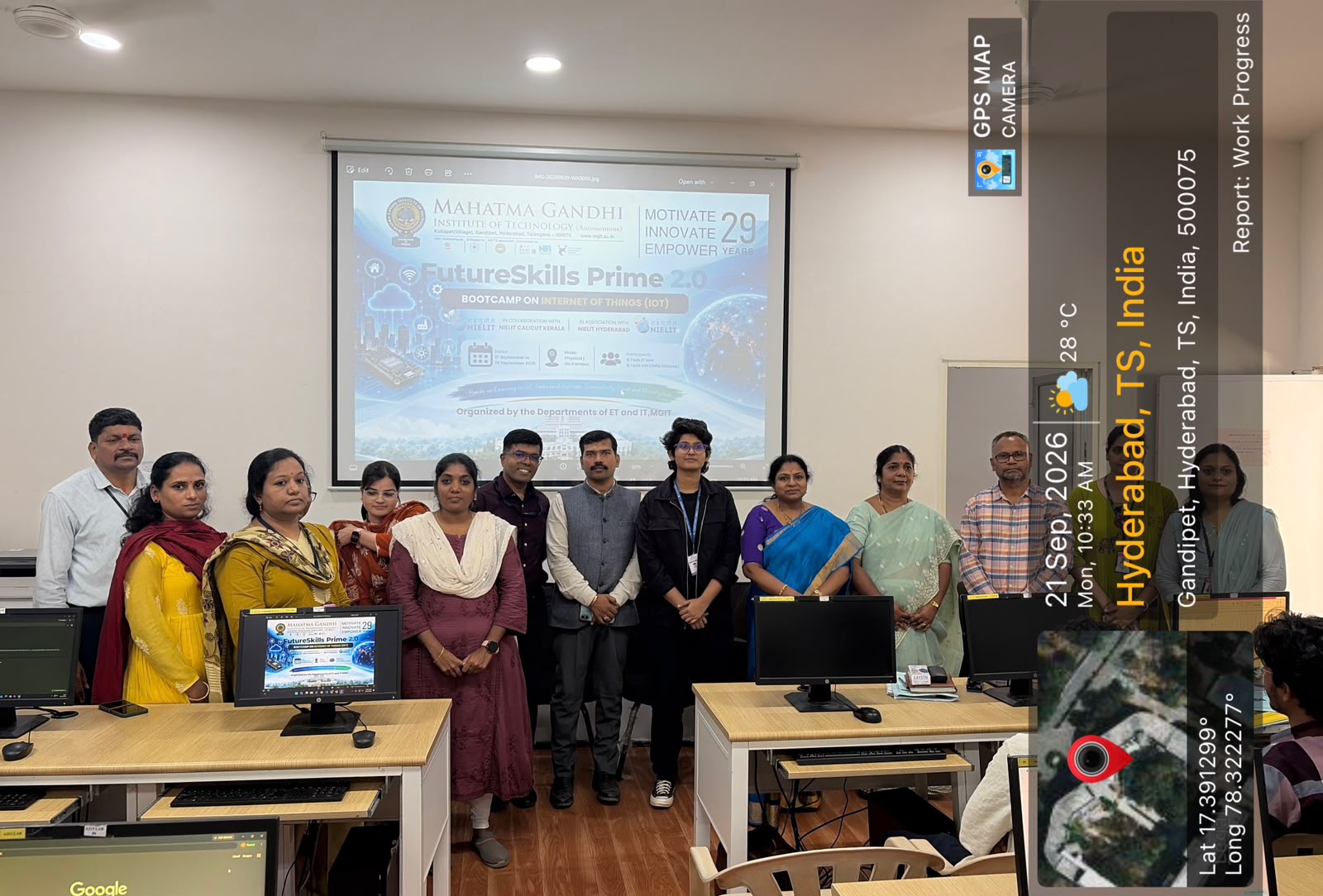
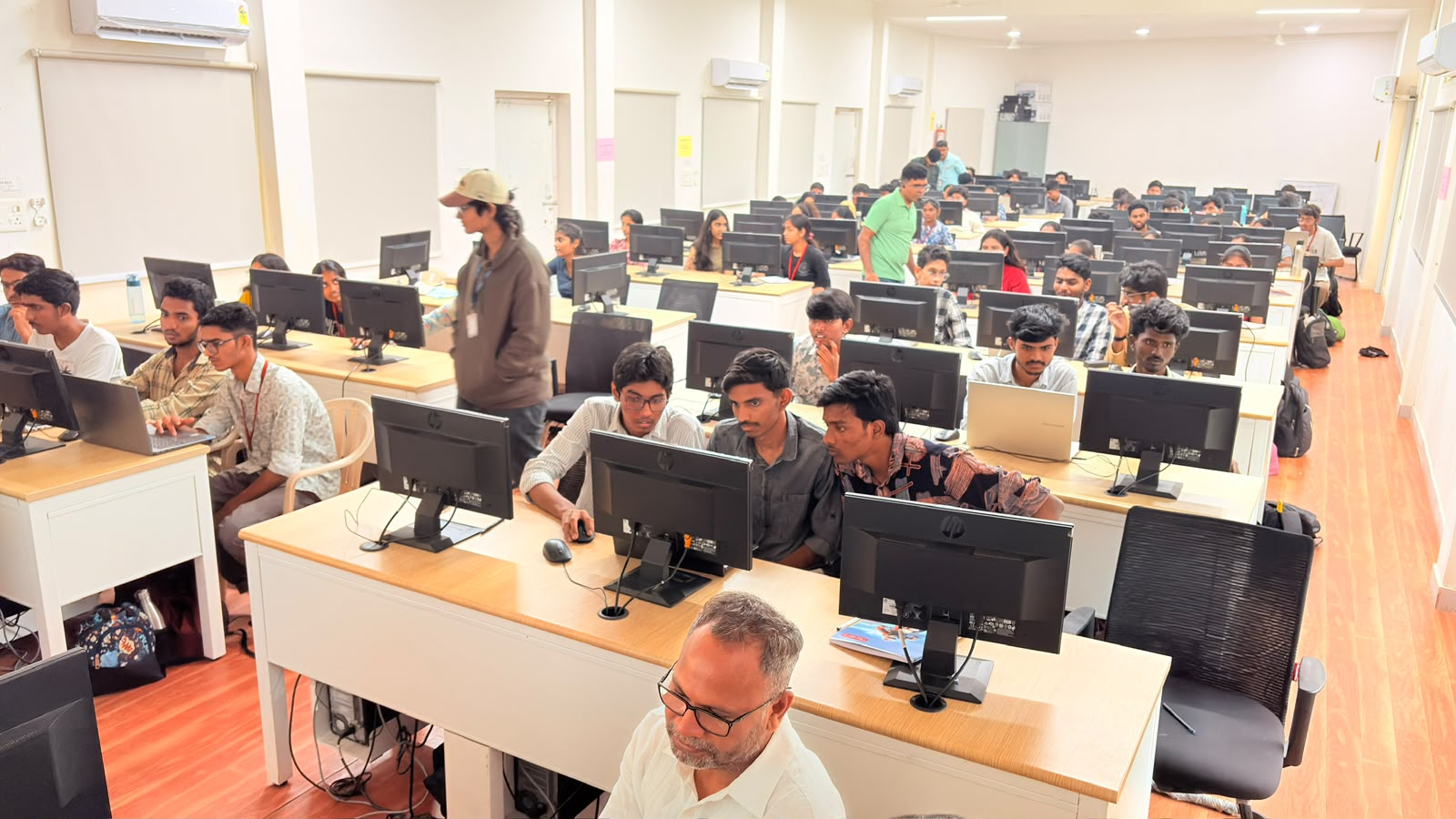
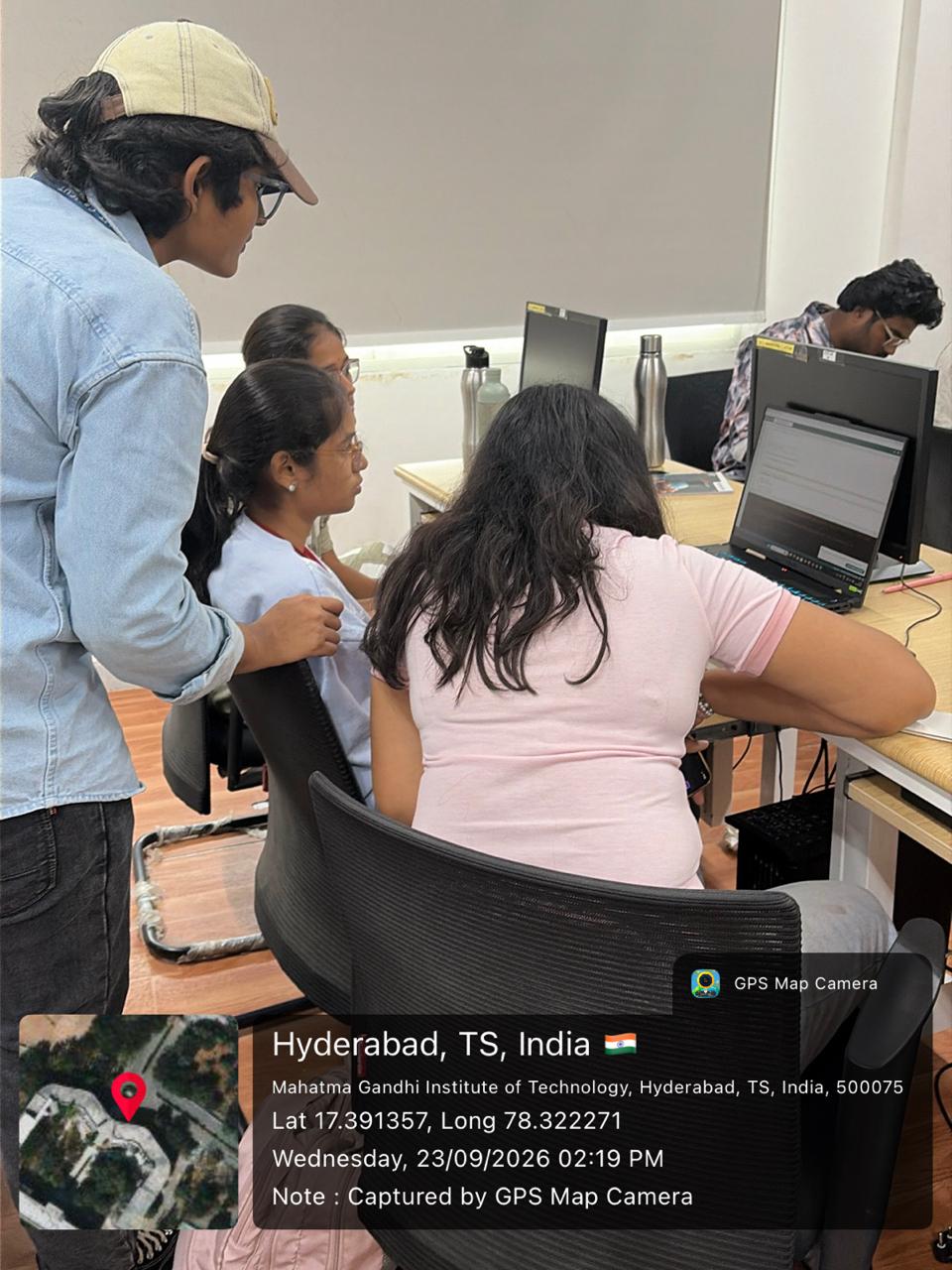
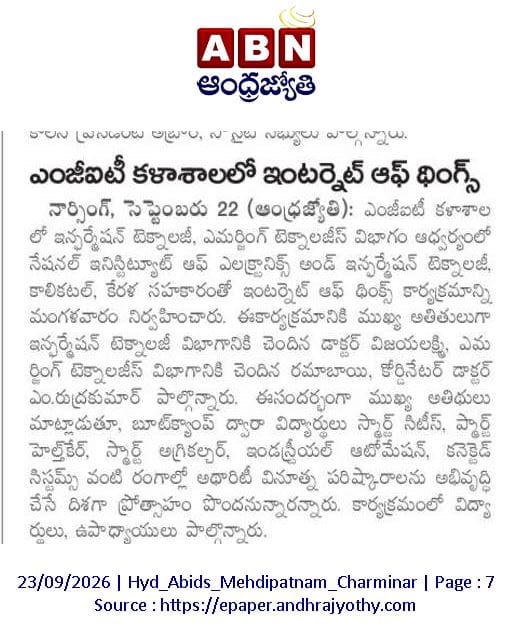
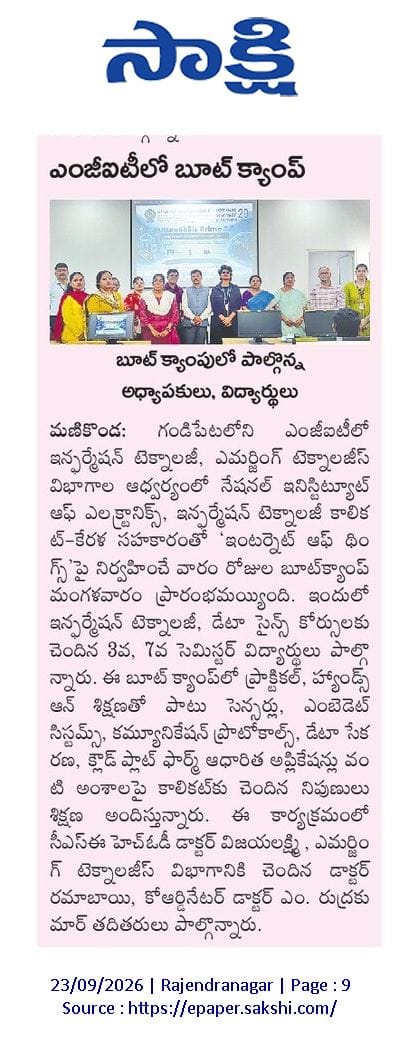
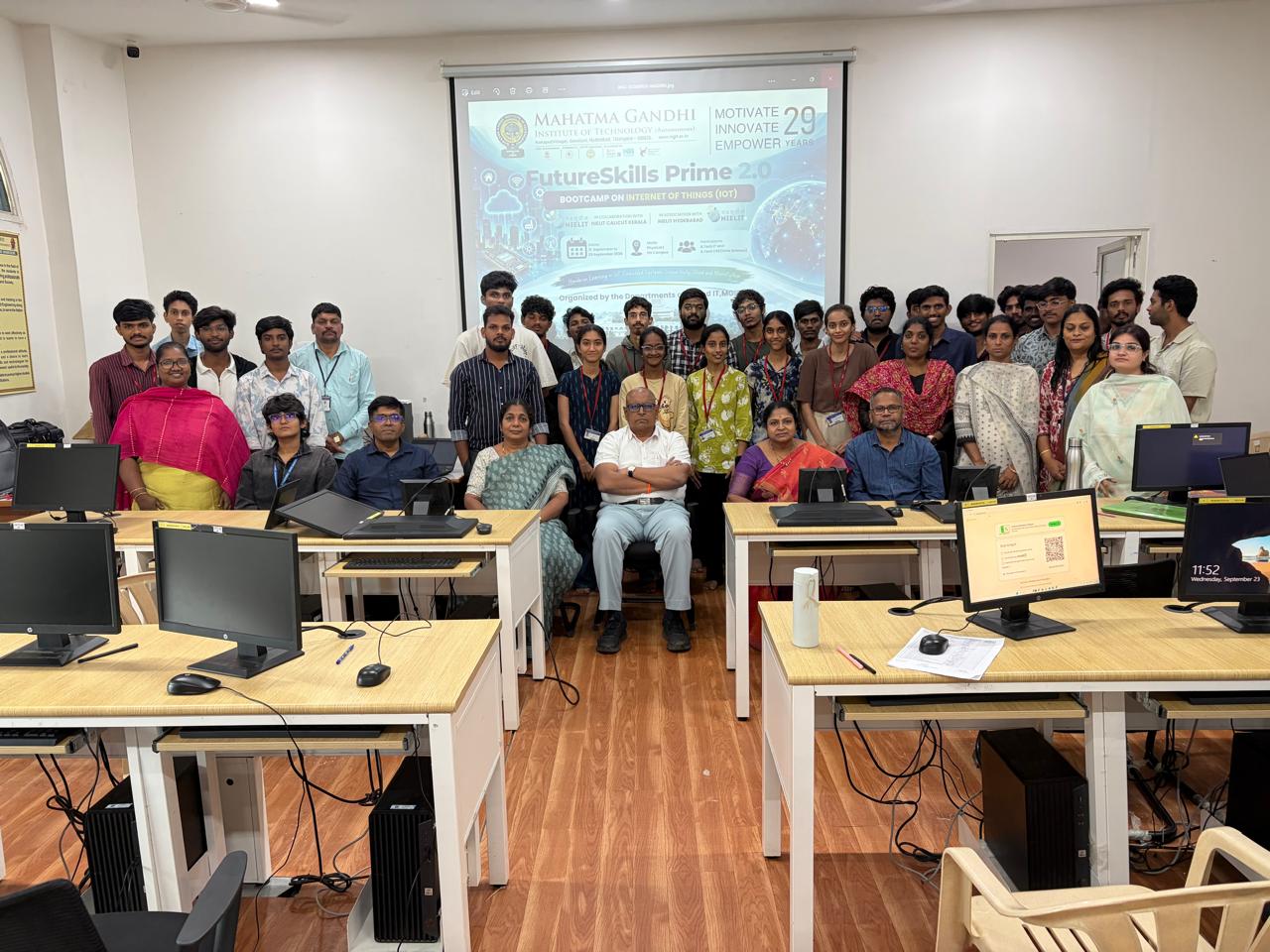
The Departments of Emerging Technologies and Information Technology, MGIT conducted a five-day FutureSkills Prime 2.0 Bootcamp on the Internet of Things (IoT) from 21 to 25 September 2026 at A-213, A Block, in collaboration with NIELIT Calicut, Kerala and in association with NIELIT Hyderabad. The programme was conducted under FutureSkills Prime, a digital skilling initiative of NASSCOM and the Ministry of Electronics and Information Technology (MeitY), Government of India.
The sessions were led by Mr. Rajesh M., Scientist E at NIELIT Calicut and Principal Investigator of the FutureSkills Prime 2.0 (IoT) project, along with Ms. Raiya Rajeevan C, Project Associate. Students of B.Tech III Semester, Information Technology and B.Tech VII Semester, CSE (Data Science) took part.
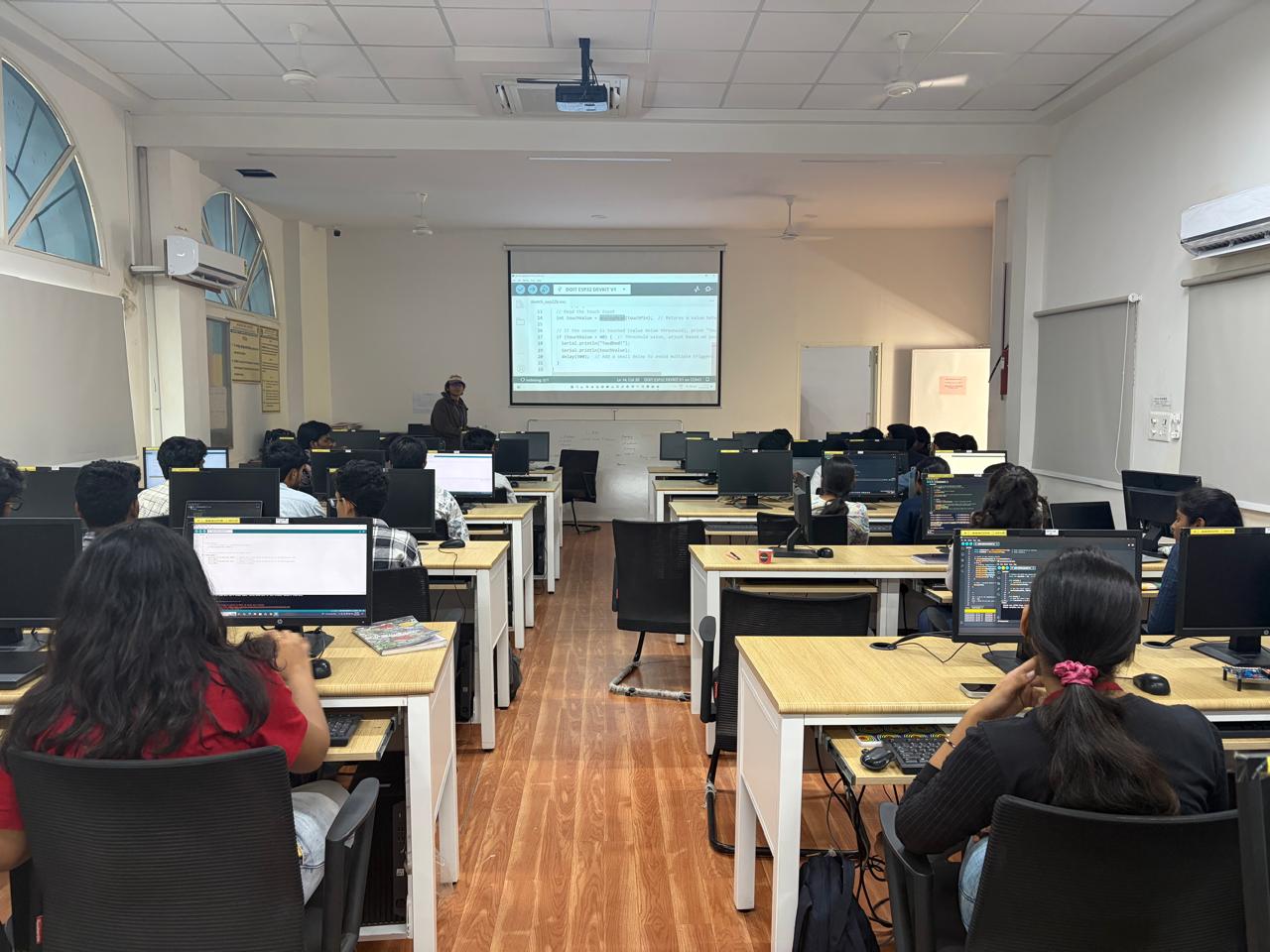
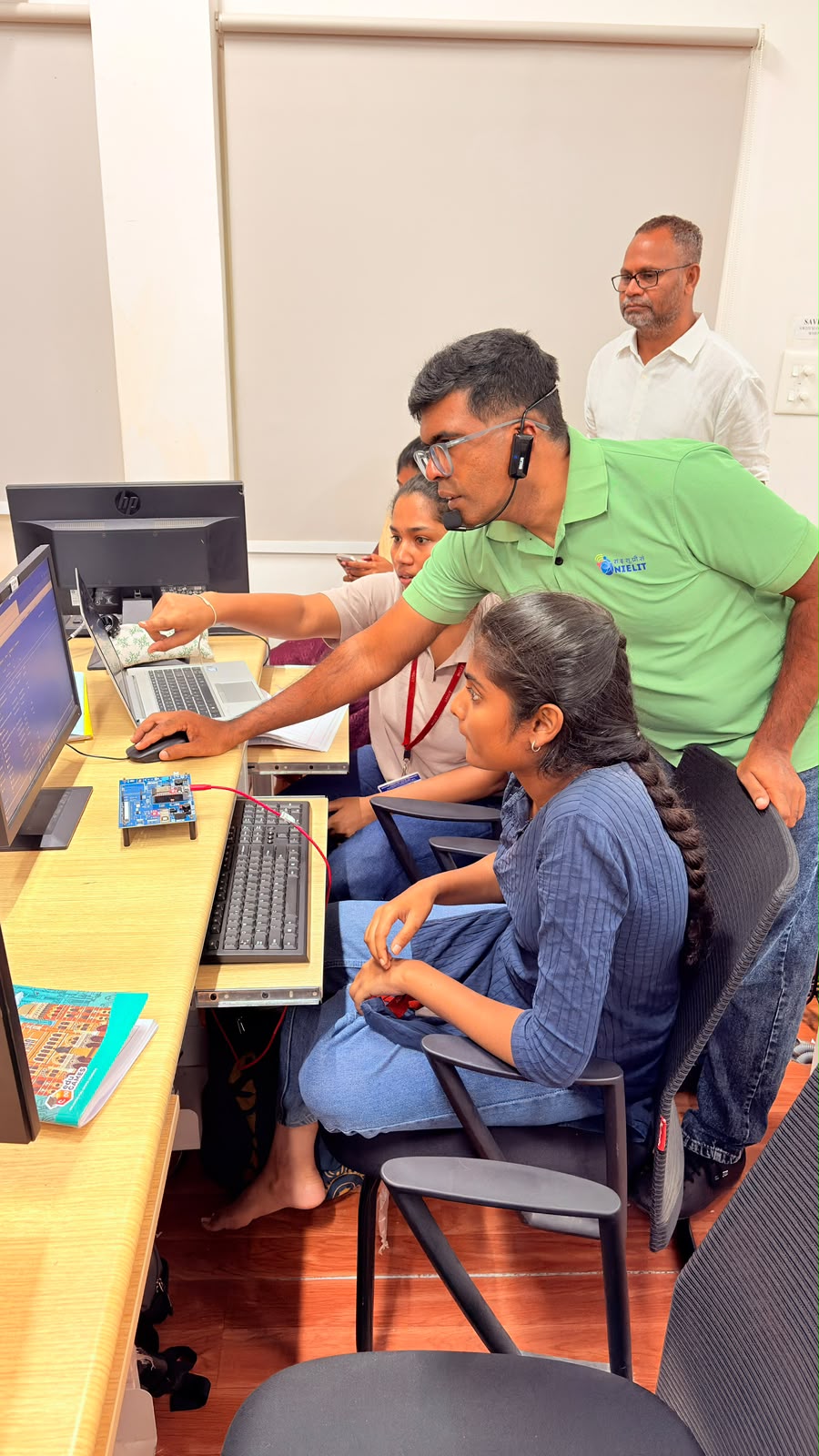
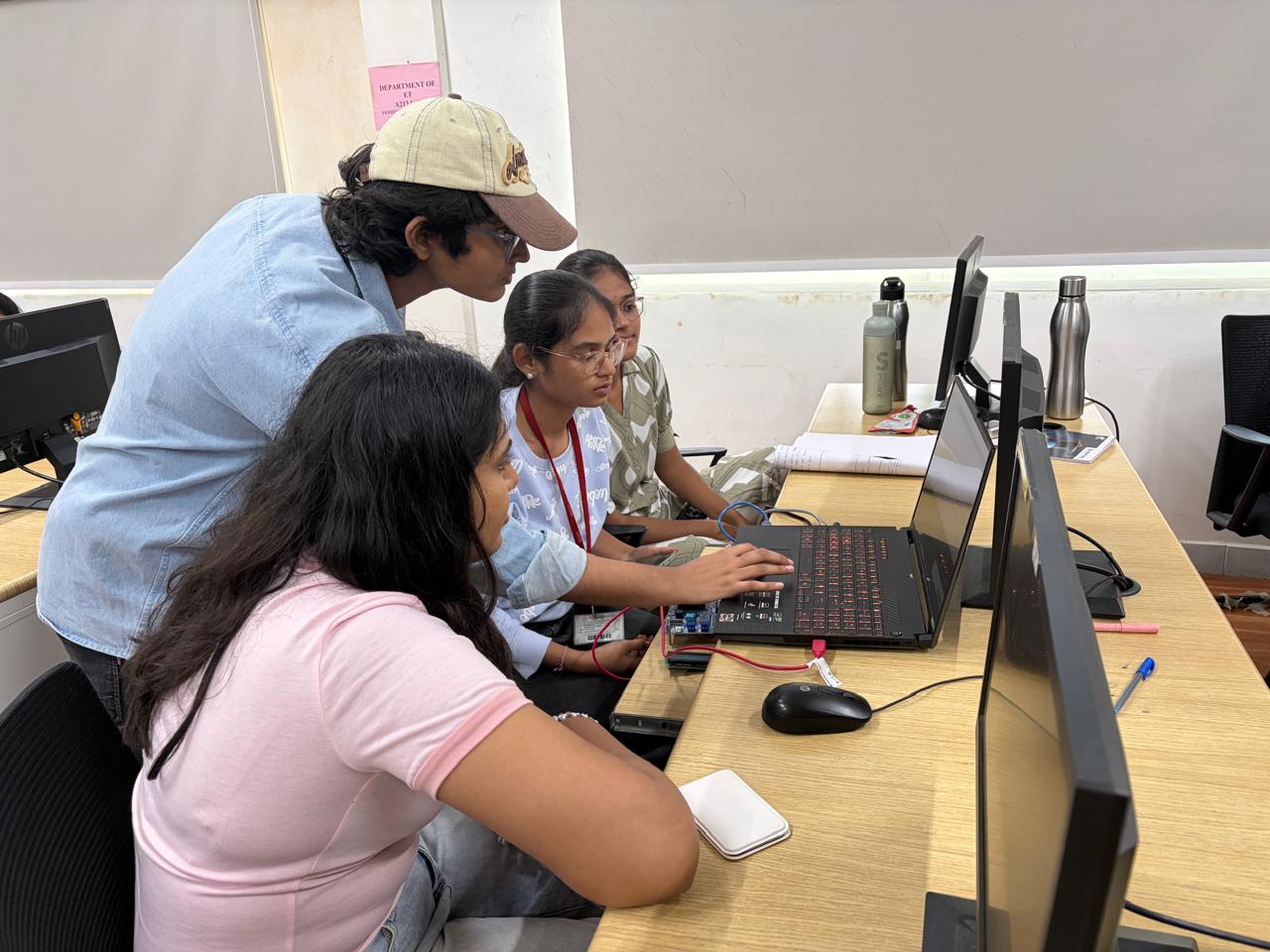
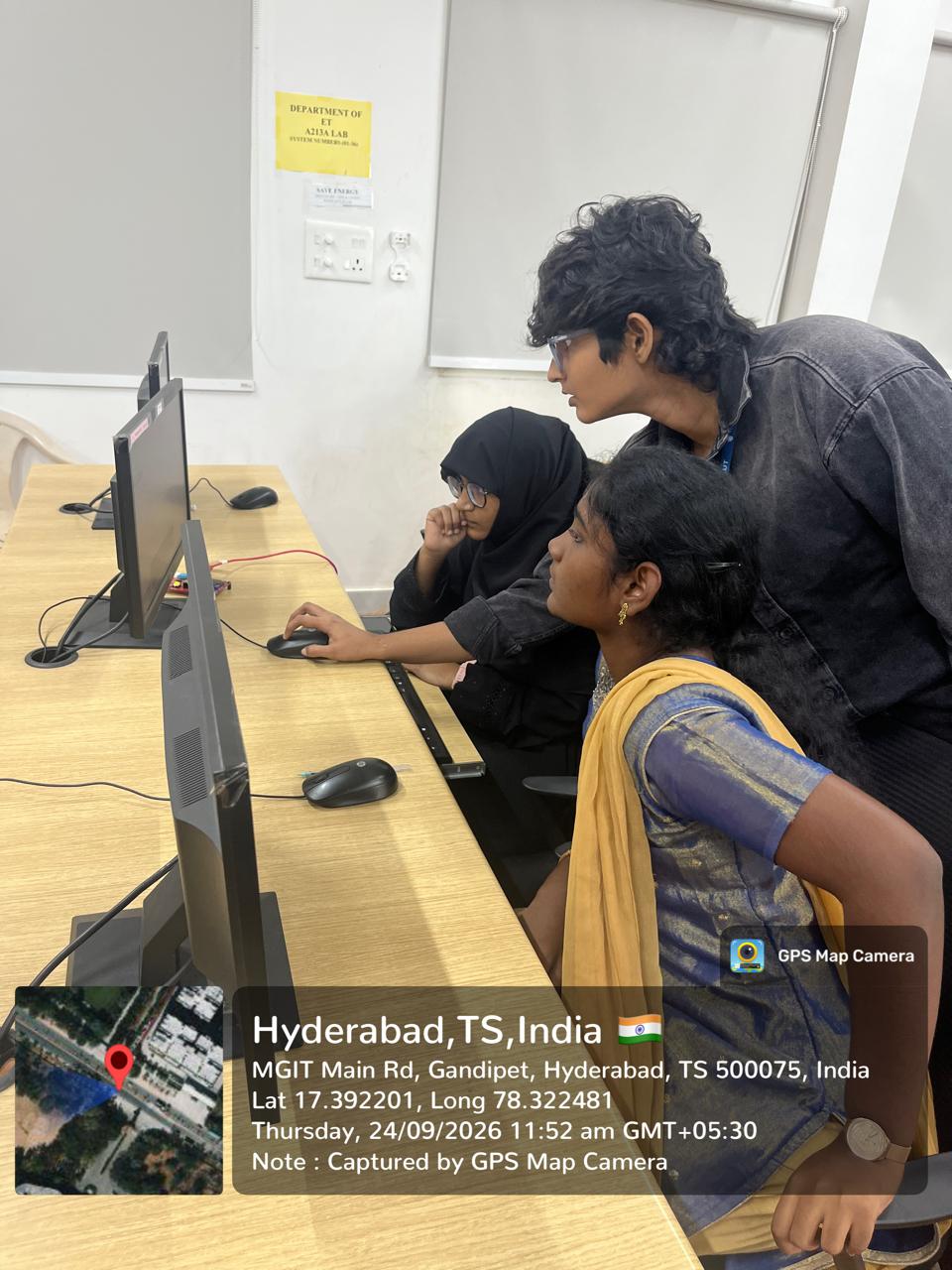
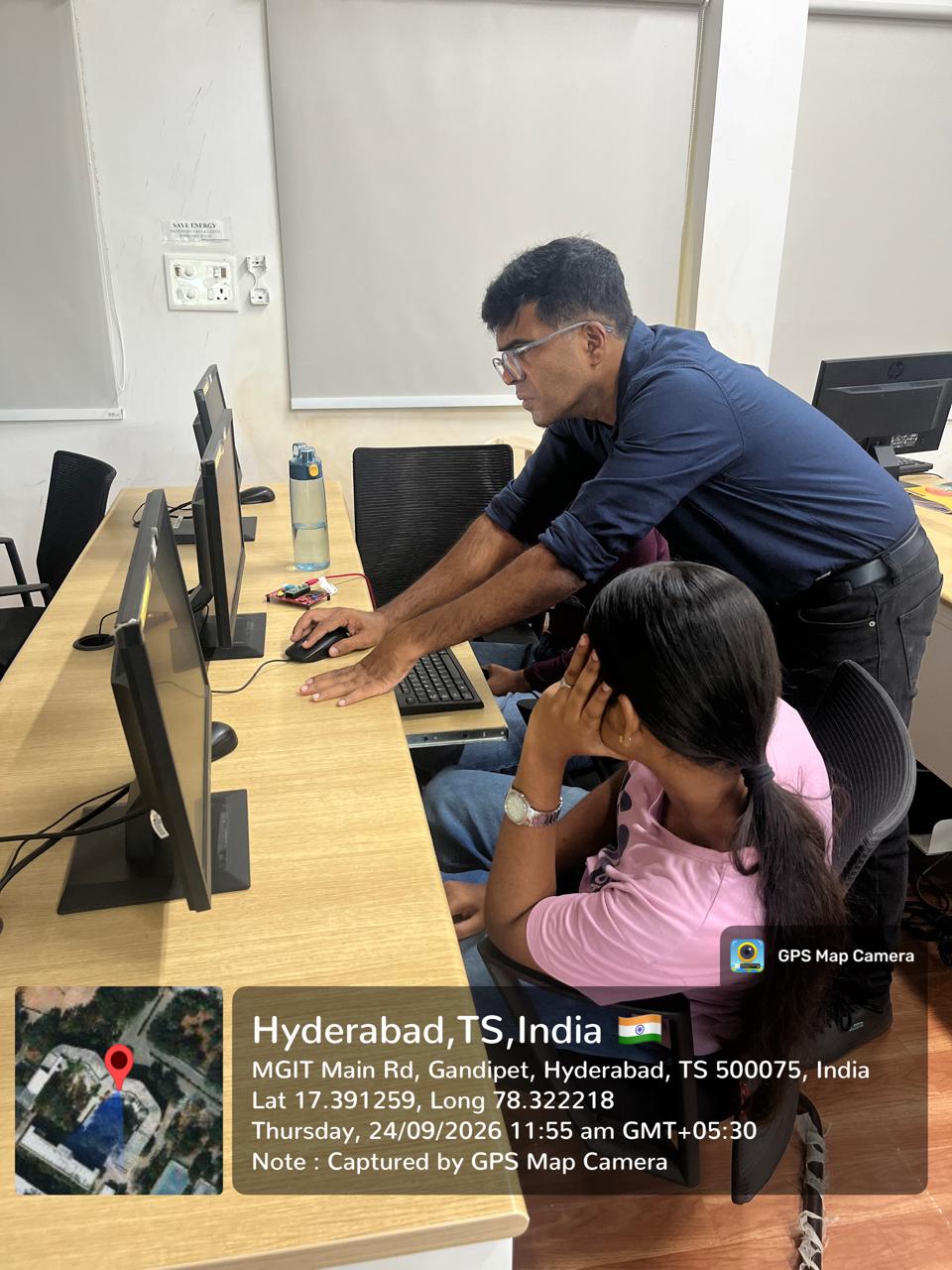
Approximately 70% of the programme was delivered as hands-on work. Participants moved from IoT fundamentals and hardware platforms on the first two days, through layered architecture, MQTT messaging and cloud integration, to MicroPython programming on ESP32 and Raspberry Pi Pico W kits, closing with a session on mobile application development for IoT. Every participant was issued NIELIT IoT Development Kits and Raspberry Pi Pico W boards for the duration of the training and built working sensor-to-cloud applications.
The bootcamp was offered free of charge under the FutureSkills Prime sponsorship. It concluded on 25 September with an assessment, a structured feedback exercise and the award of joint MGIT – NIELIT certificates.
On completion of the bootcamp, the participant is able to:
| CO | PO1 | PO2 | PO3 | PO4 | PO5 | PO6 | PO7 | PO8 | PO9 | PO10 | PO11 | PO12 |
|---|---|---|---|---|---|---|---|---|---|---|---|---|
| CO1 | 3 | 2 | – | – | 1 | – | – | – | – | – | – | 2 |
| CO2 | 3 | 2 | 2 | 2 | 3 | – | – | – | 2 | – | – | 2 |
| CO3 | 2 | 3 | 3 | 2 | 2 | – | – | – | – | – | – | 2 |
| CO4 | 2 | 2 | 3 | 2 | 3 | – | – | – | 2 | – | – | 2 |
| CO5 | 2 | 2 | 3 | 3 | 3 | – | – | – | – | 1 | – | 3 |
| CO6 | 3 | 2 | 3 | 2 | 3 | – | – | – | 2 | – | – | 3 |
| CO7 | 3 | 3 | 3 | 3 | 3 | 2 | 1 | – | 3 | 2 | 2 | 3 |
Correlation levels: 3 — Substantial (High), 2 — Moderate (Medium), 1 — Slight (Low), – — No correlation.
PO1 Engineering knowledge · PO2 Problem analysis · PO3 Design / development of solutions · PO4 Conduct investigations of complex problems · PO5 Modern tool usage · PO6 The engineer and society · PO7 Environment and sustainability · PO8 Ethics · PO9 Individual and team work · PO10 Communication · PO11 Project management and finance · PO12 Life-long learning
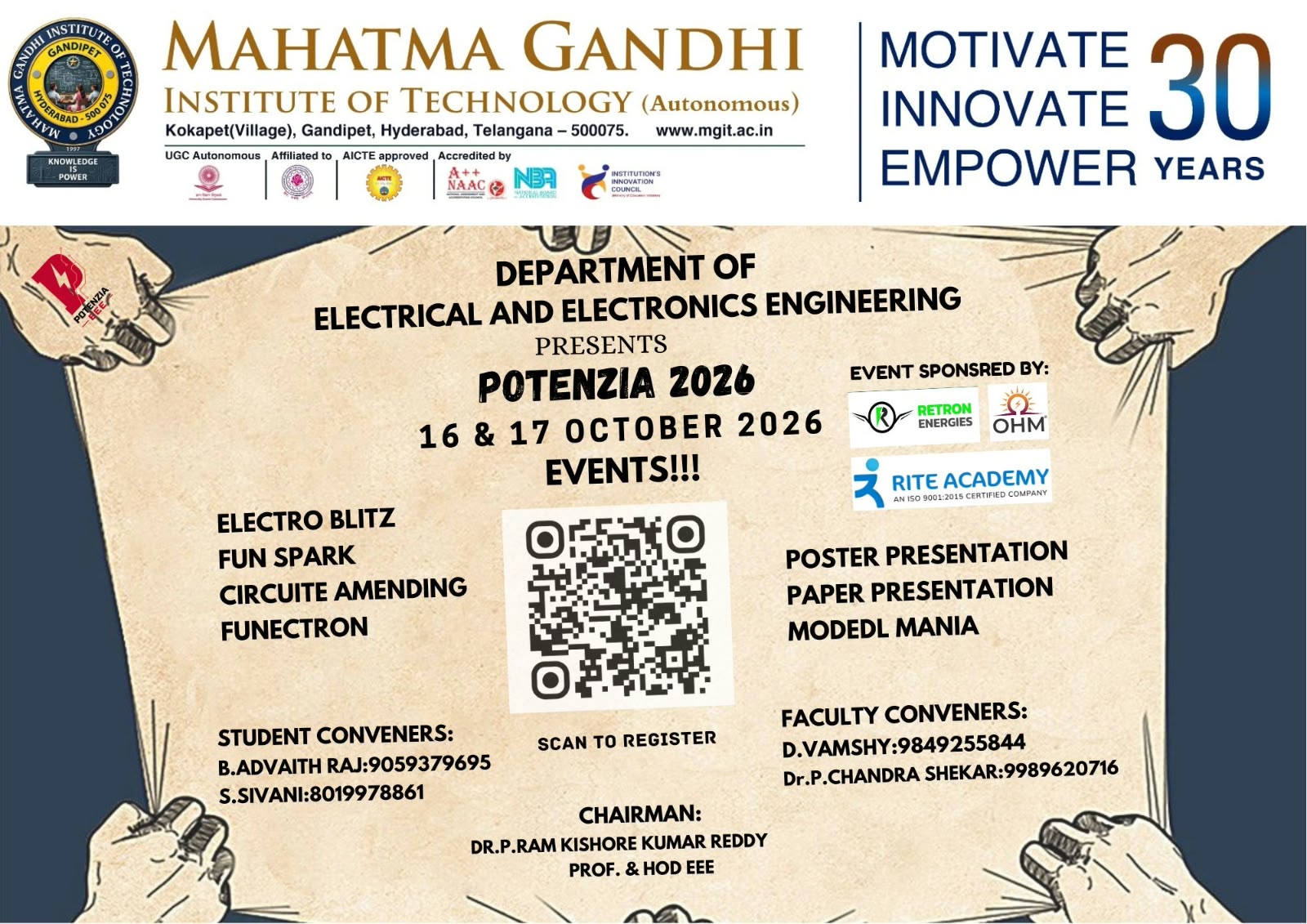
Mahatma Gandhi Institute of Technology (Autonomous) Department of Electrical and…
16 Oct 2026 - 17 Oct 2026
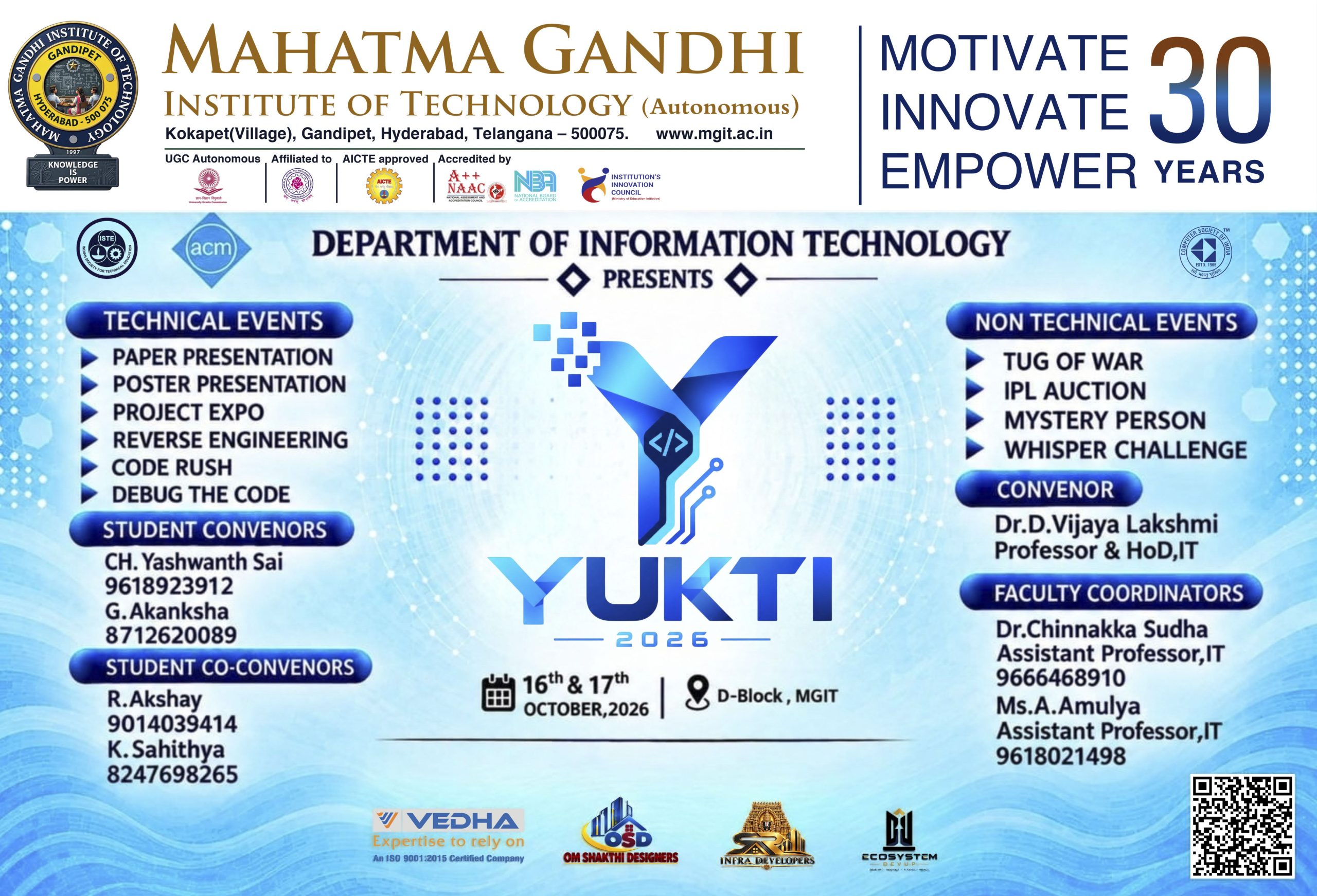
Mahatma Gandhi Institute of Technology (Autonomous) Department of Information Technology…
16 Oct 2026 - 17 Oct 2026
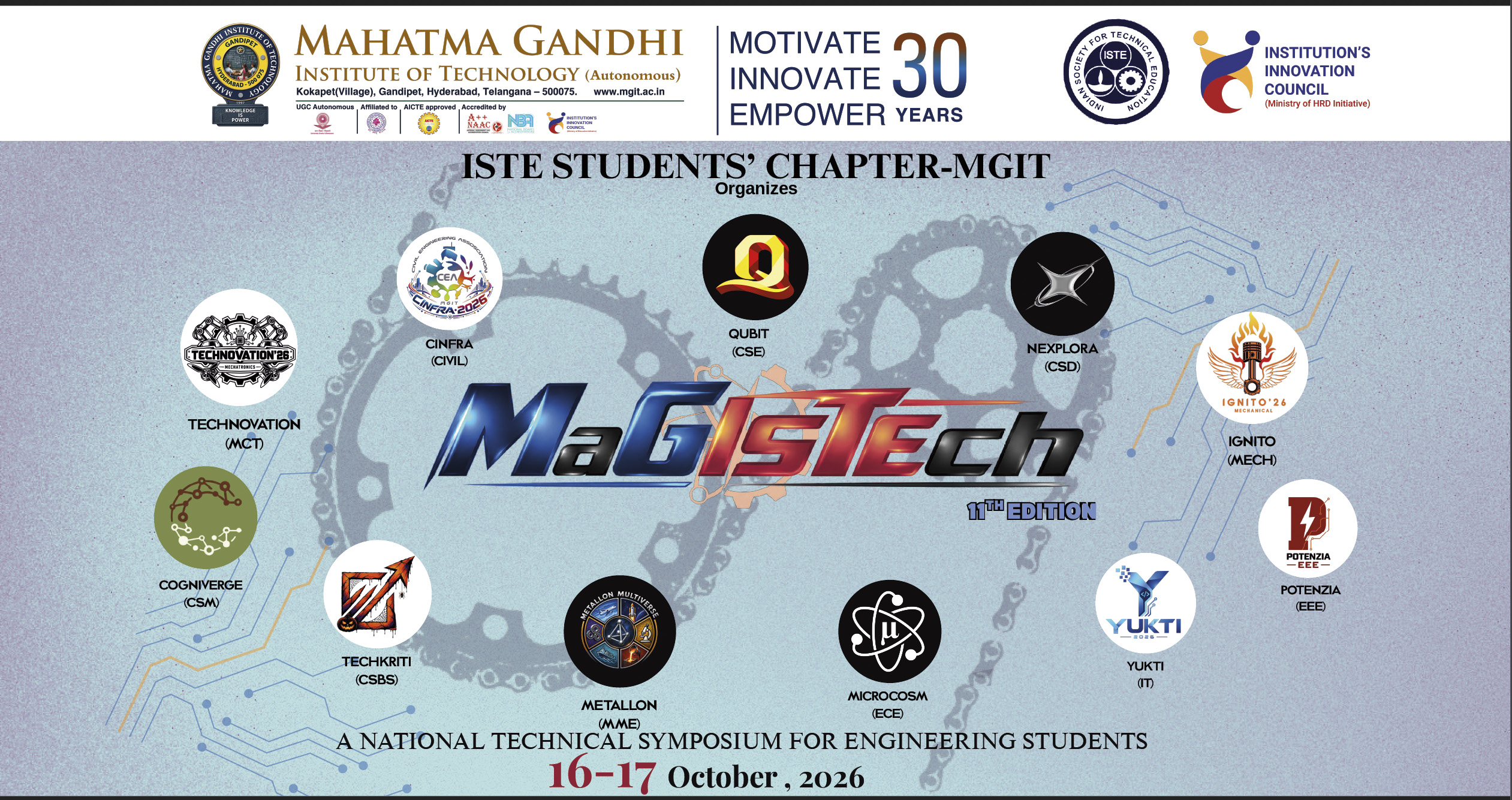
Upcoming Event · National-Level Technical Symposium MAGISTECH 2026 A Two-Day…
16 Oct 2026 - 17 Oct 2026
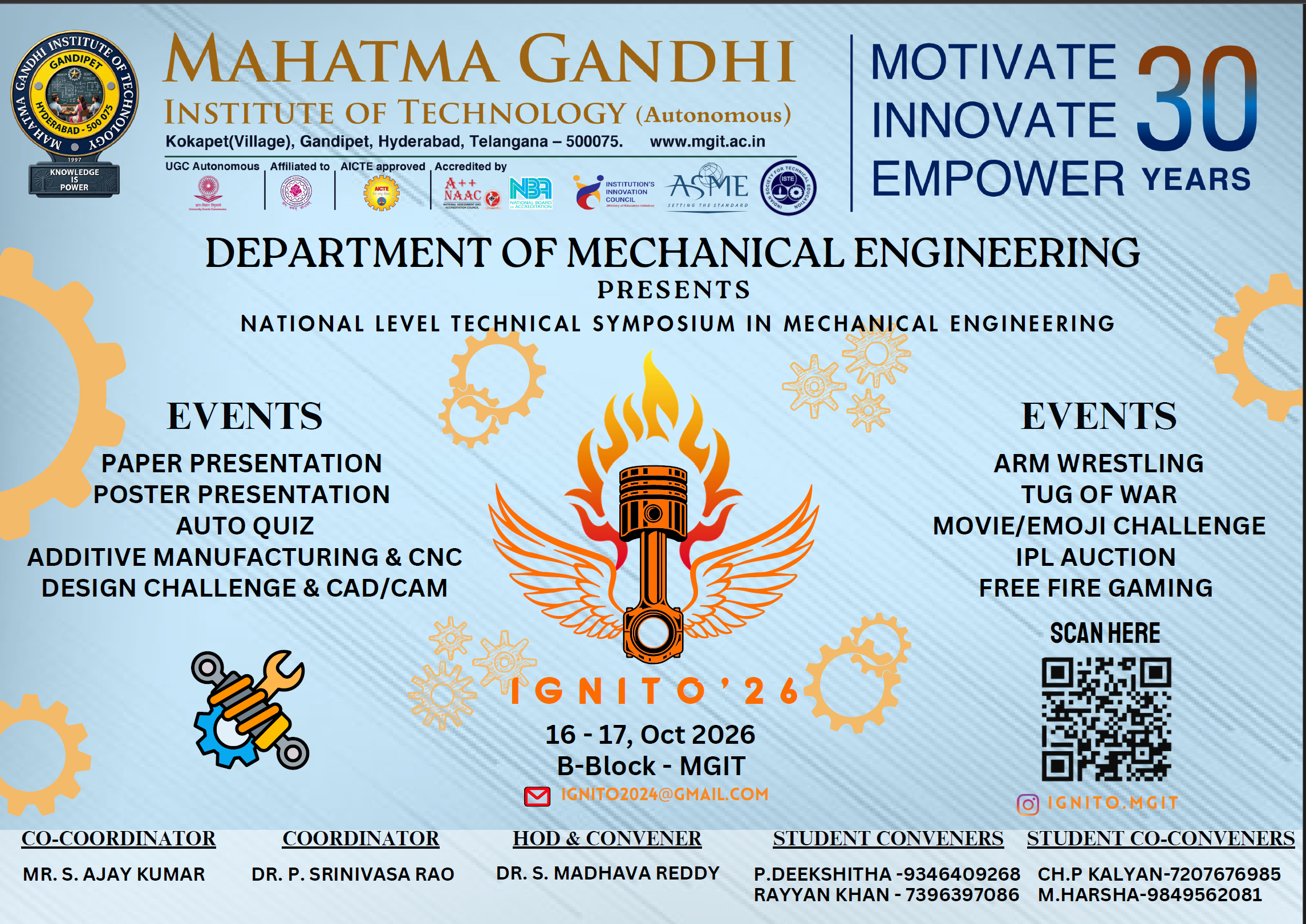
Mahatma Gandhi Institute of Technology (Autonomous) Department of Mechanical Engineering…
16 Oct 2026 - 17 Oct 2026
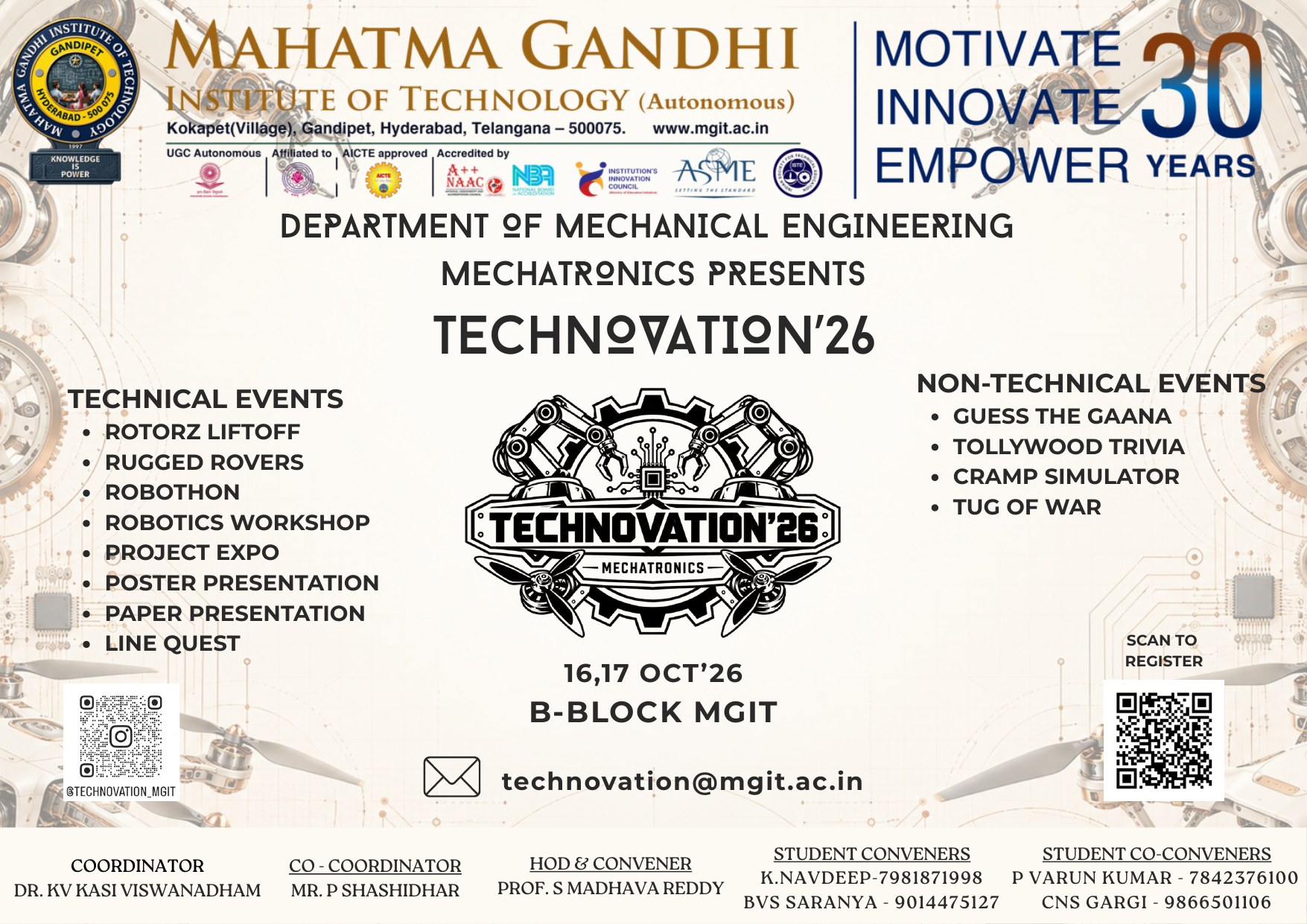
Mahatma Gandhi Institute of Technology (Autonomous) Department of Mechanical (Mechatronics)…
16 Oct 2026 - 17 Oct 2026
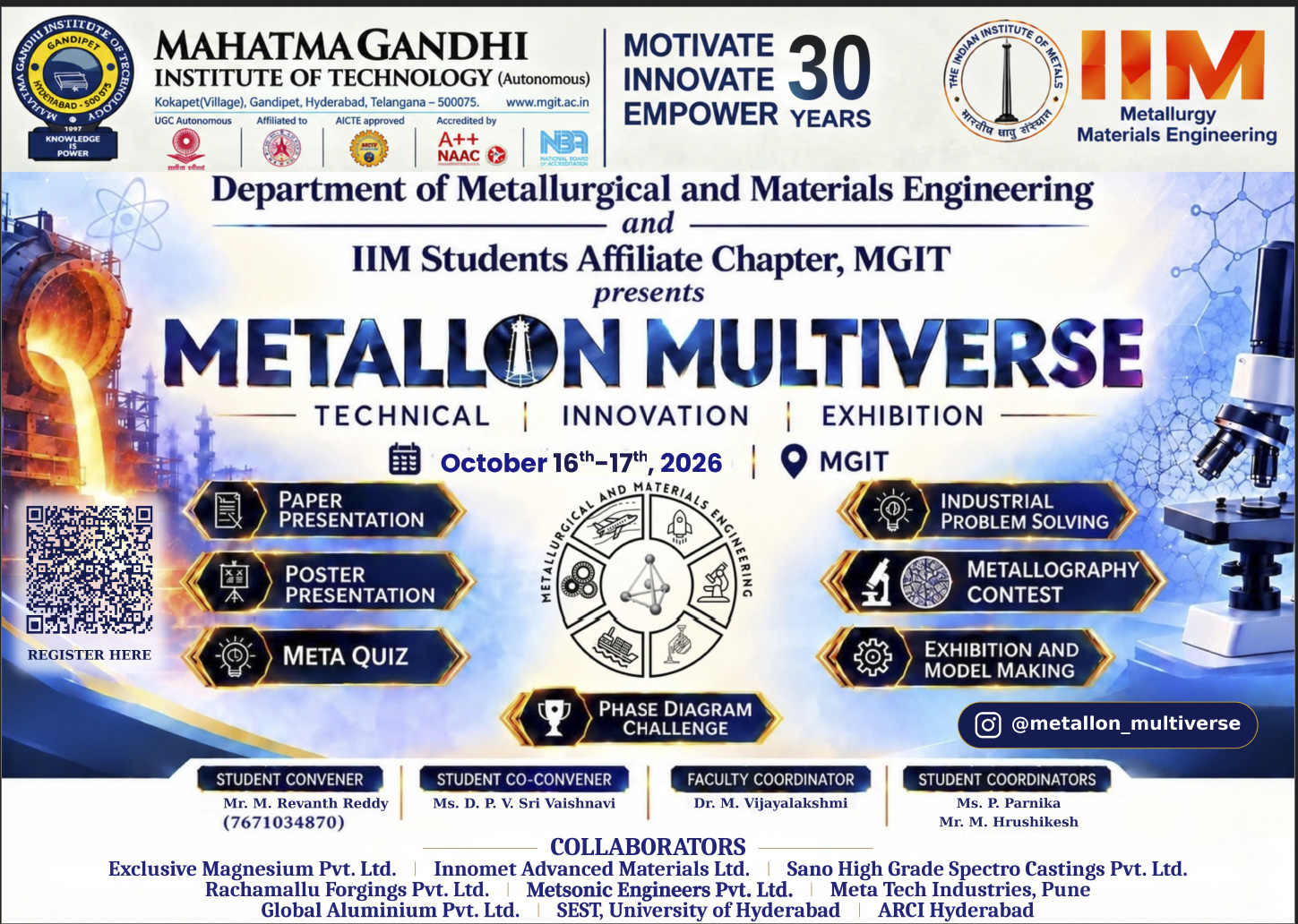
Mahatma Gandhi Institute of Technology (Autonomous) Department of Metallurgical and…
16 Oct 2026 - 17 Oct 2026
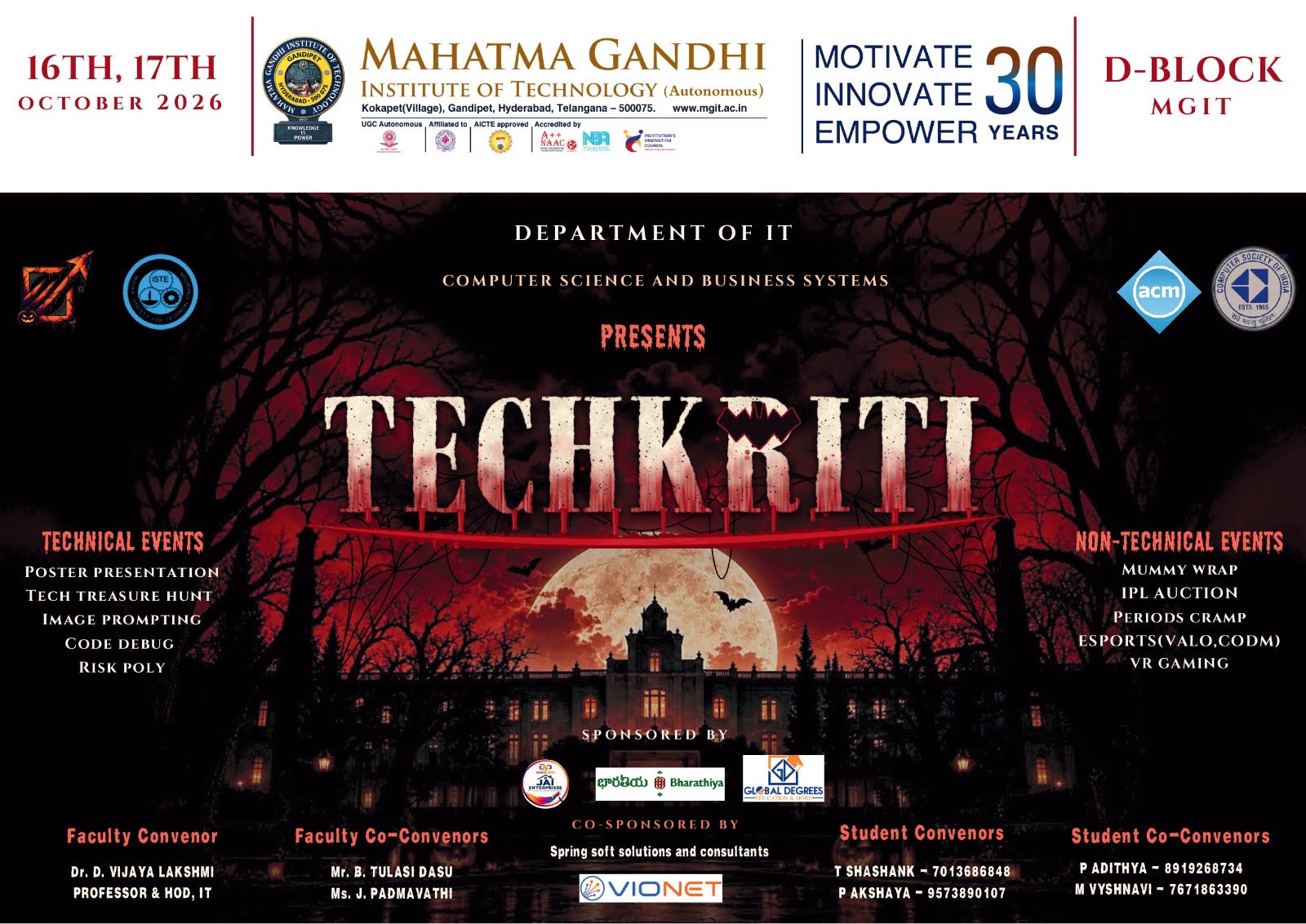
Mahatma Gandhi Institute of Technology (Autonomous) Department of IT –…
16 Oct 2026 - 17 Oct 2026
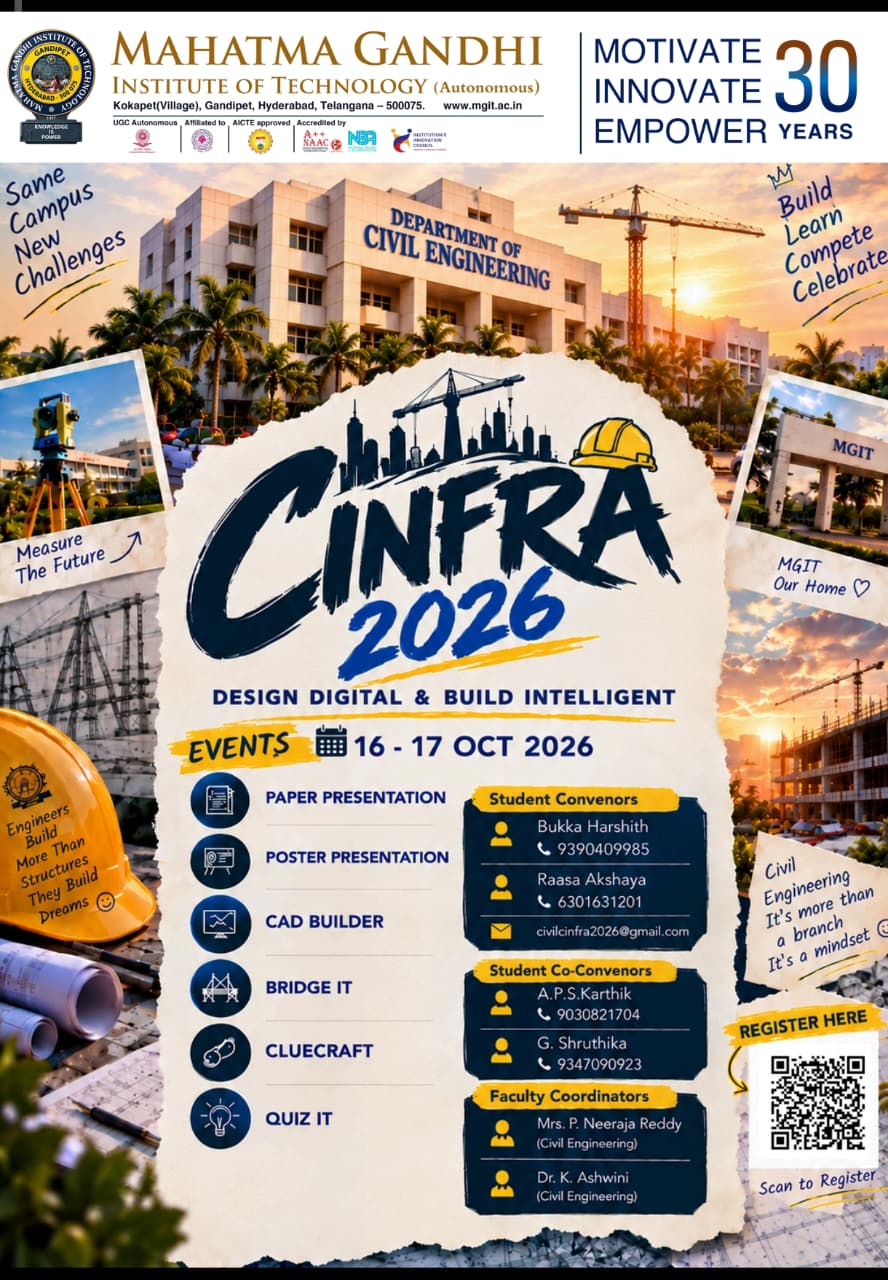
Mahatma Gandhi Institute of Technology (Autonomous) Department of Civil Engineering…
16 Oct 2026 - 17 Oct 2026